

How to plan a Daming Temple day tour in Yangzhou
When visiting Yangzhou, Daming Temple is almost a must-see: a thousand-year-old temple on the middle peak of Shugang Hill. From Jianzhen's voyage to Japan and Ouyang Xiu's Pingshan Hall to the panoramic views from Qiling Pagoda, one day is just enough to cover the main route.
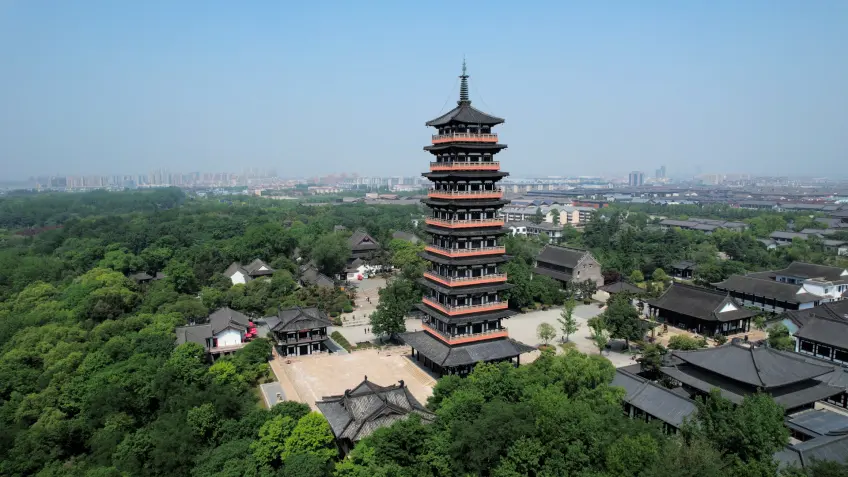
Take the high-speed train to Yangzhou Station or Yangzhou East Station, and you can book a station transfer in advance to go straight to the Pingshan Hall area. For a hassle-free trip combining Slender West Lake and Daming Temple, check out the Wuxi-Yangzhou River Charm route in our private tours first, and add a private guide for an in-temple tour.
Just send your group size, date, and whether you'd like to climb the pagoda to customer service. Below, we'll first cover tickets, transportation, and routes inside the temple.
Daming Temple highlights at a glance
Located at No. 8 Pingshantang East Road, Hanjiang District, Yangzhou, the temple was founded in the Daming era of the Liu Song dynasty (Southern Dynasties) more than 1,500 years ago and is known as "Yangzhou's foremost scenic site" and "the finest sight east of the Huai River."

Before his voyage to Japan, Jianzhen practiced here. Ouyang Xiu and Su Shi left their cultural legacy in Pingshan Hall and Gulin Hall, and Emperor Qianlong visited multiple times during his tours of Jiangnan. Qiling Pagoda was first built in the Sui Dynasty (the current pagoda was rebuilt in the 1990s), and Pingshan Hall dates back to the Northern Song Dynasty—both are the most striking historical landmarks in the temple.
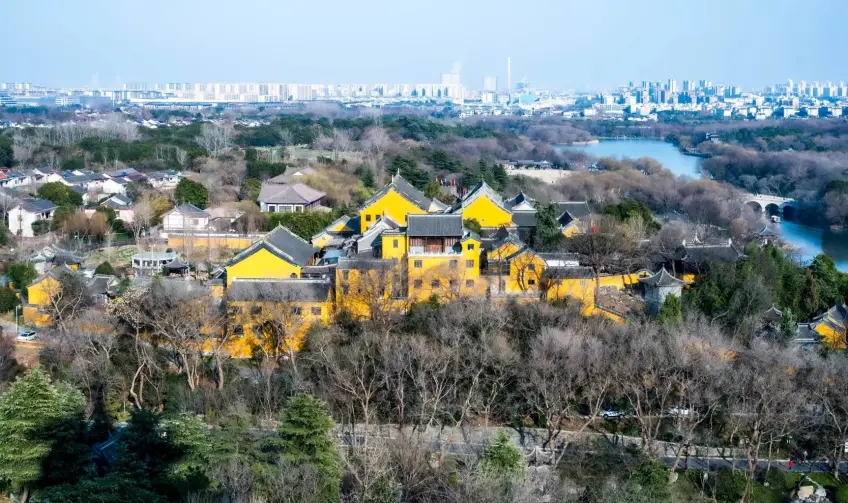
Strolling through the grounds, you can experience both the solemnity of a Buddhist temple and the tranquility of a Jiangnan garden. Climb the pagoda for sweeping views of Yangzhou and Slender West Lake.

Wuxi, Yangzhou and Zhenjiang 4-day 3-night private tour | Yuantouzhu · Lingshan · Slender West Lake
A 4-day 3-night private tour starting in Wuxi and ending in Yangzhou: boat ride on Lake Tai at Yuantouzhu (Turtle Head Isle), Plum Garden, Nanchang Street and Nianhua Bay; after the Lingshan Grand Buddha, head to Dongguan Street in Yangzhou; Slender West Lake and Daming Temple; on the last day, Jinshan Temple and Beigu Mountain in Zhenjiang. Includes transport, guide, hotels and admission tickets. Foreign-language guides available.
This route covers classic Jiangsu highlights including Daming Temple, making it ideal for cross-city travelers who'd rather skip arranging their own transport.
Daming Temple tickets and booking
Ticket prices vary by season: February to October is peak season, with adult tickets at ¥48; November to January is off-season, with adult tickets at ¥30. Climbing Qiling Pagoda requires a separate ticket. Prices for the pagoda ticket and the Slender West Lake combo ticket are subject to the on-site announcements of the day.
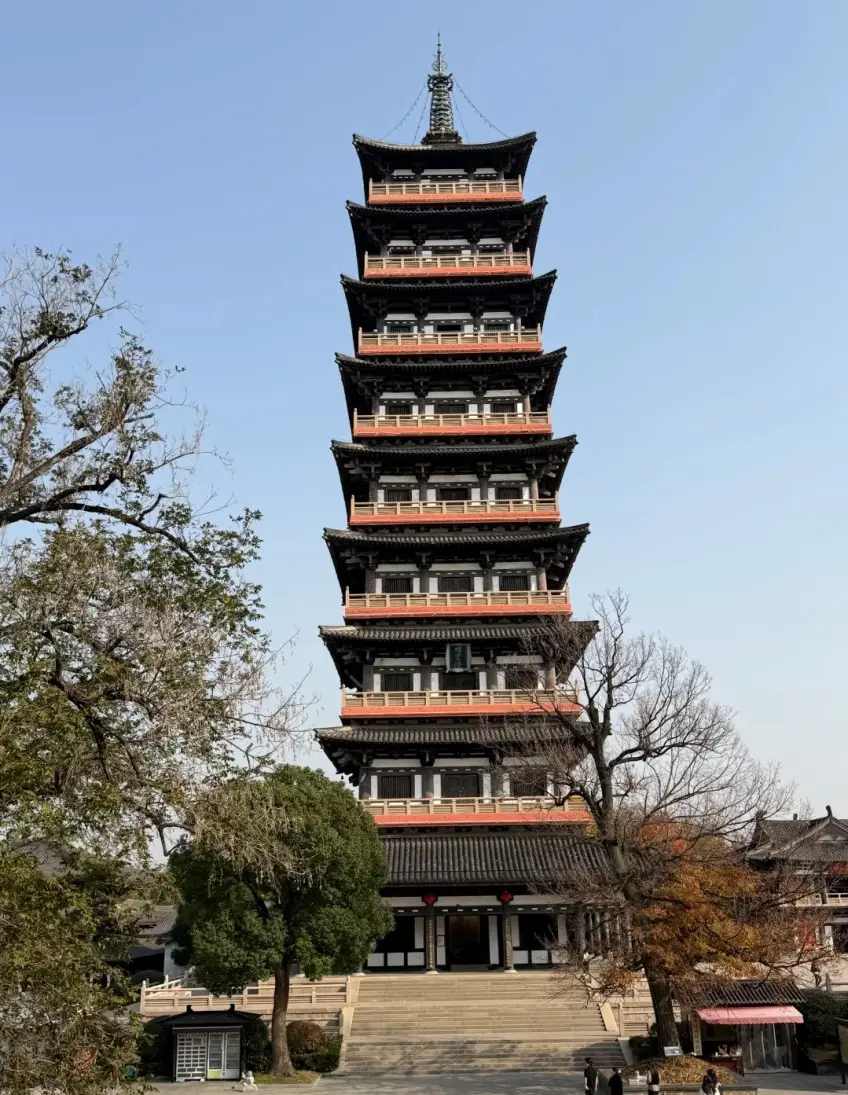
The stone steps in front of the pagoda mark the start of the climb. After buying your ticket, line up following the on-site signs; during holidays, booking online in advance is recommended.
Discounts: Children aged 6 and under or 1.4 meters and shorter, seniors aged 65 and over, military personnel, retired cadres, journalists, people with disabilities and religious believers enter free with valid ID; seniors aged 60–65 and full-time undergraduate and college students get half price. Some honorary certificate holders may also enter free—subject to the attraction's notices on the day.
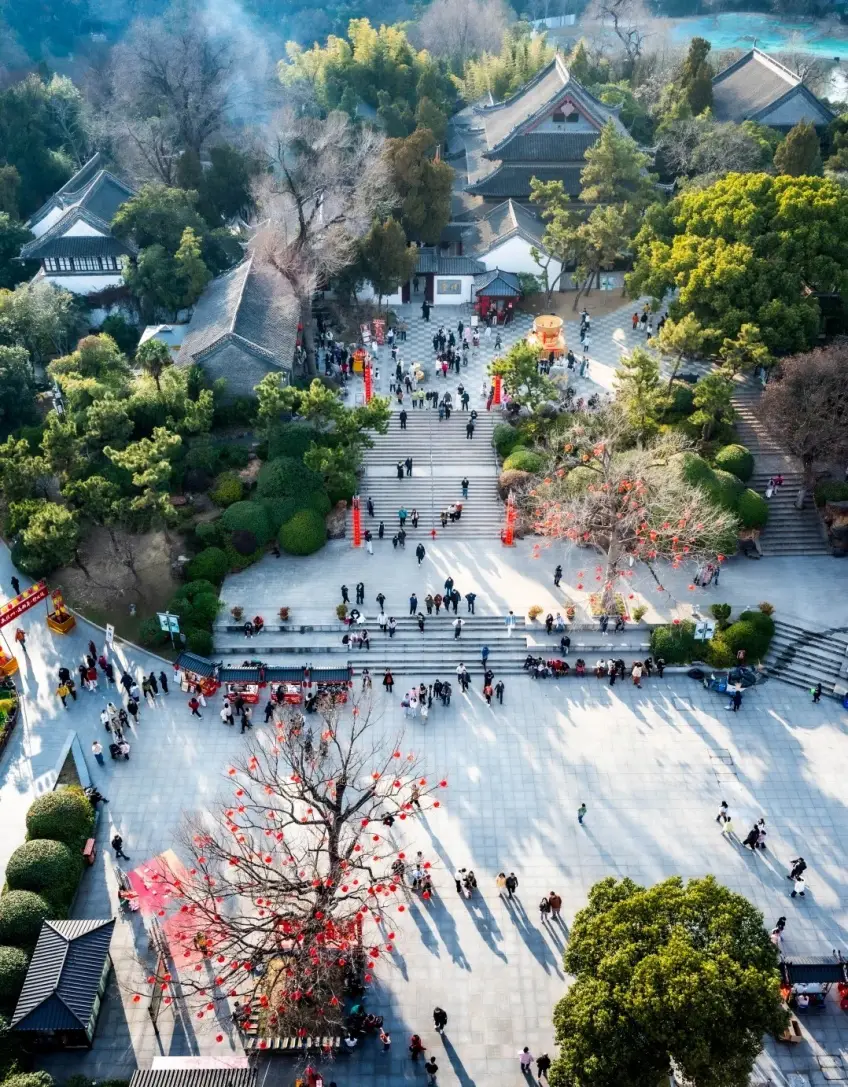
The temple plaza has distinct levels. During peak season, crowds gather on the steps and along the main axis, so skipping the 9 a.m. rush makes for a more relaxed visit.
Getting to Daming Temple
In the city, take Bus Tour 1 or Bus Tour 3 to Daming Temple Stop, about a 4-minute walk to the entrance. From Yangzhou Railway Station, take Bus Tour 1; from Yangzhou East Railway Station, transfer to Bus Tour 3 to Pingshantang Ecological Parking Lot and walk from there.
If driving, navigate to "Daming Temple". The scenic area has its own parking lot, about ¥10/day.
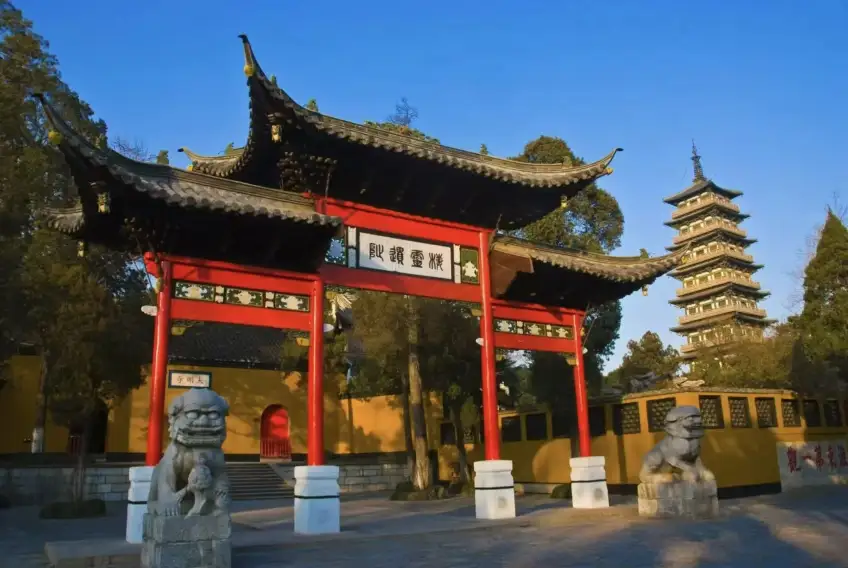
The red-column stone archway at the main gate reads "Qiling Ruins"—your first photo stop after your ticket is checked.
Daming Temple itinerary
We recommend arriving around 8:30 AM, as crowds pick up after 9:00 AM. Follow the central axis: Archway → Hall of Heavenly Kings → Mahavira Hall, then head west to Pingshan Hall, Gulin Hall, and Ouyang Shrine, east to Jianzhen Memorial Hall, and finally climb Qiling Pagoda before heading to the Fifth Spring in the West Garden.

First stop: the memorial archway
Four pillars and three bays, with the seal-script inscription "Qiling Ruins" over the central gate and carvings on both sides set off by ancient trees. After taking photos, head north along the central axis.
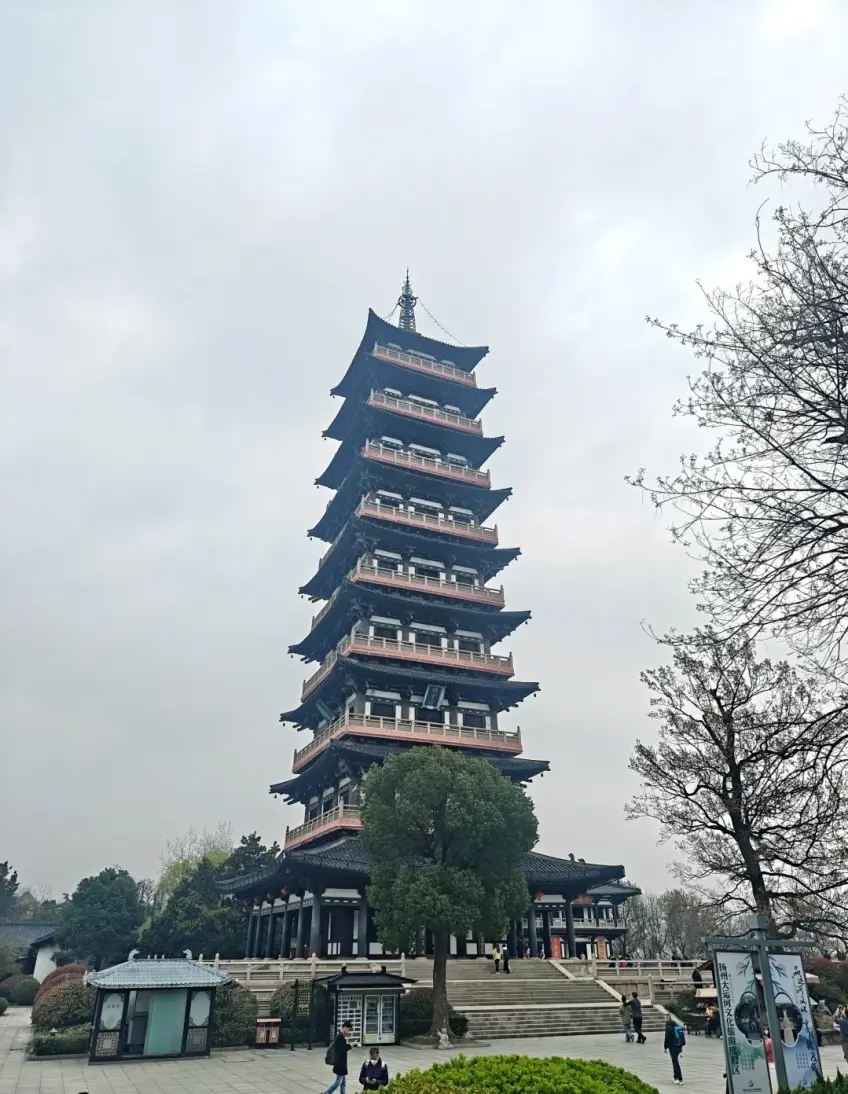
Beyond the archway, the main axis opens up and Qiling Pagoda keeps appearing in the distance—no need to rush up it right away.
Where worship begins: Hall of Heavenly Kings
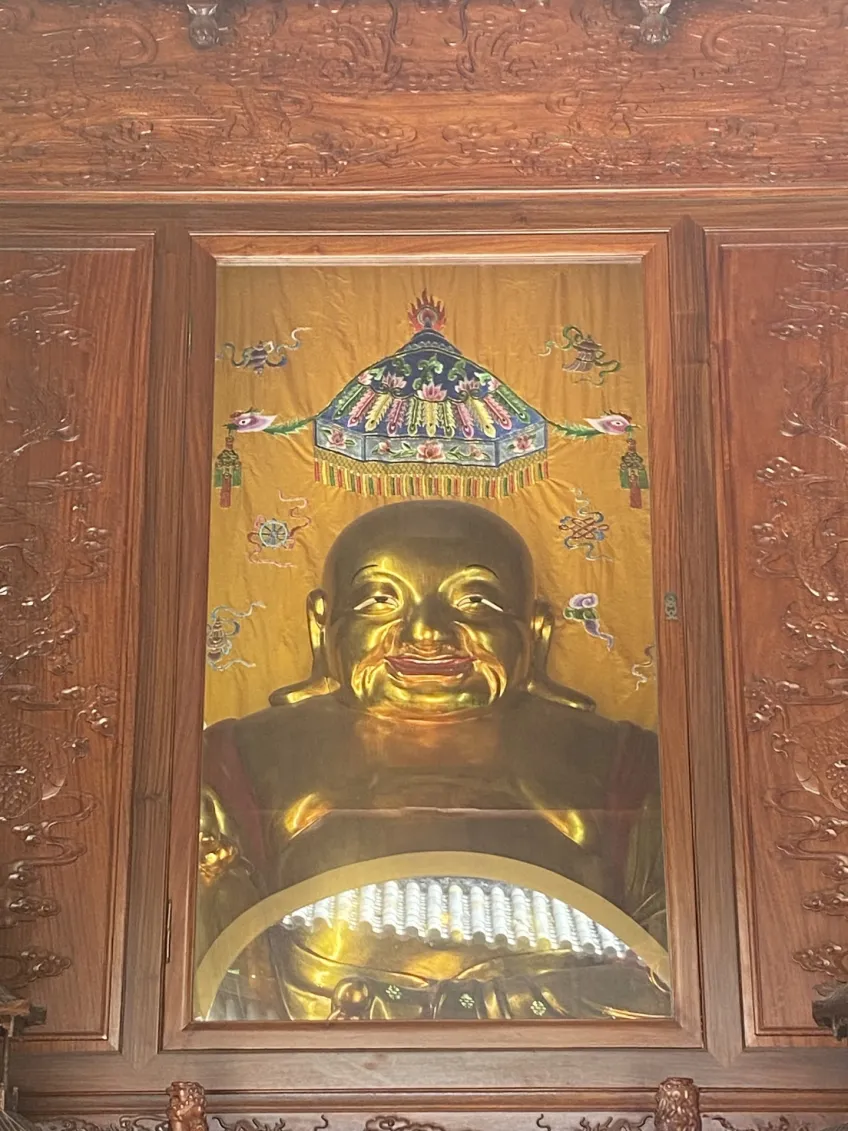
The Hall of Heavenly Kings serves as the mountain gate. Inside, a smiling Maitreya greets visitors, with Skanda standing guard behind him. Do not touch the statues and turn off your flash when taking photos. Please keep quiet.
Mahavira Hall
Pass through the back door of the Hall of Heavenly Kings to reach the main hall, a grand building that echoes the style of the High Tang.
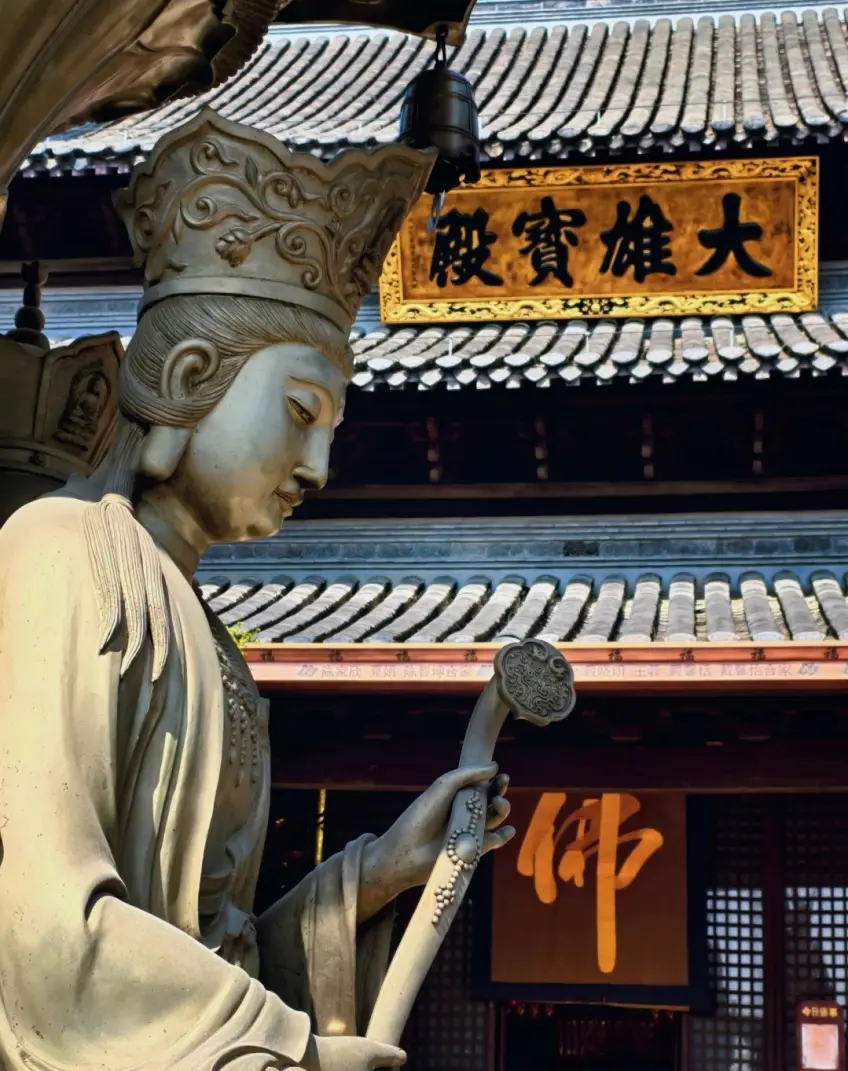
The stone statues outside and the "Mahavira Hall" plaque are iconic photo spots—snap a picture before going in.
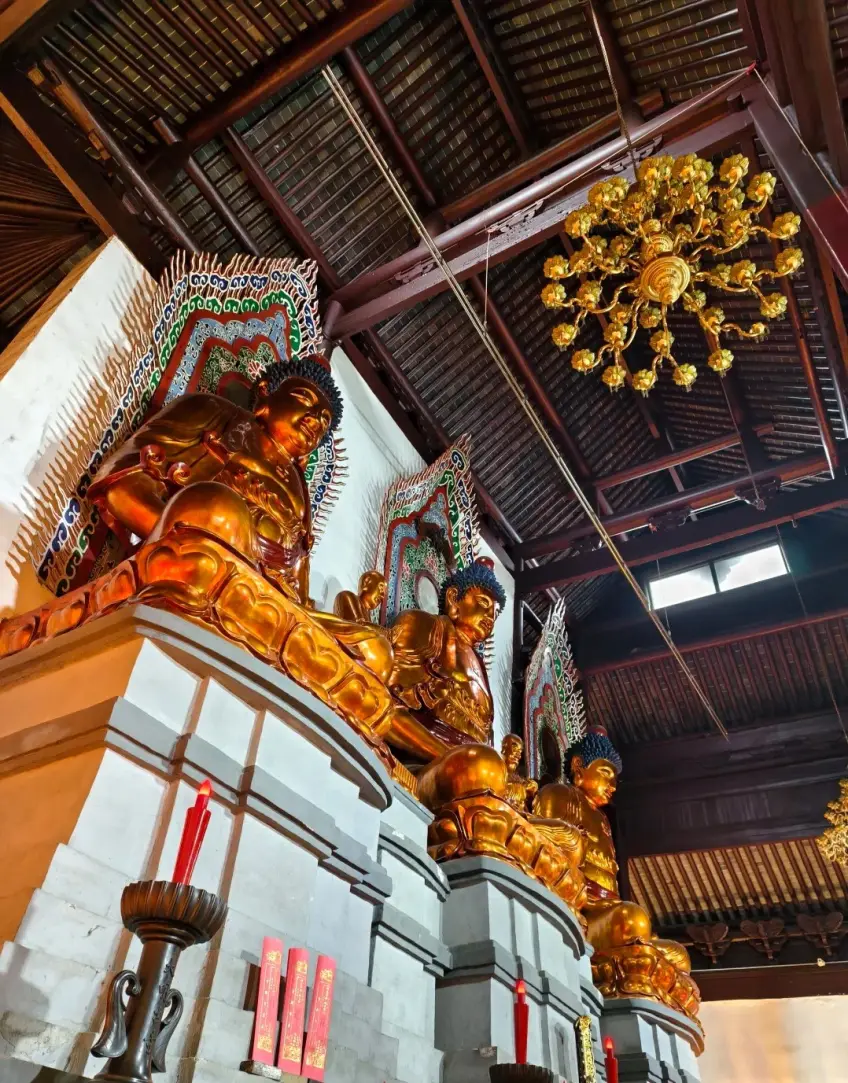
In the center stands Sakyamuni Buddha, flanked by the Medicine Buddha and Amitabha Buddha, surrounded by 18 Arhats with distinct expressions.
Pingshan Hall
Follow the west path into Xianren Jiuguan (Immortals' Old Lodge), where vines shade the wooden trellis outside. In front of the hall, Xingchun Terrace is framed by ancient wisteria and banana palms—a perfect backdrop for vintage-style photos.
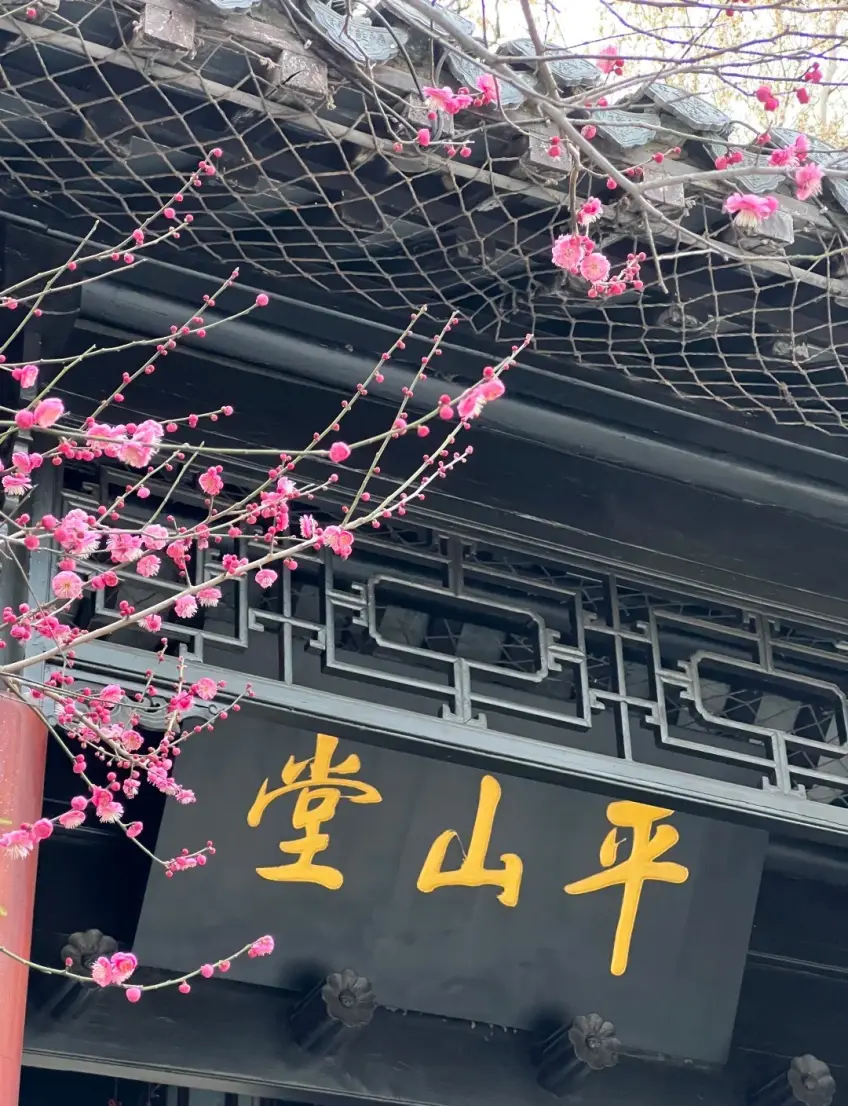
The "Pingshan Hall" plaque framed with spring plum blossoms marks the literary space Ouyang Xiu left behind in Yangzhou.
Gulin Hall
Right next to Pingshan Hall, Gulin Hall was built by Su Shi to honor his mentor Ouyang Xiu. Its name comes from the lines "Deep valleys wind gracefully below, tall trees merge in dappled shade."
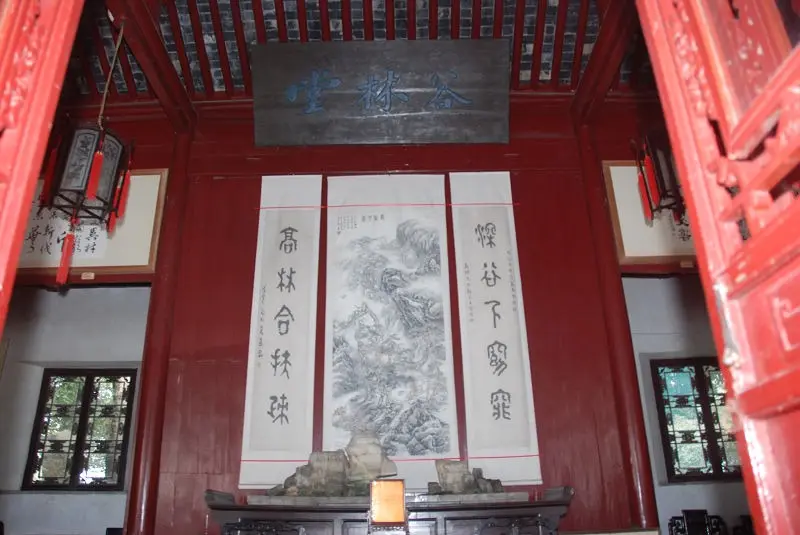
The plaques, landscape scrolls and couplets inside are elegantly displayed—perfect for lingering over the calligraphy.
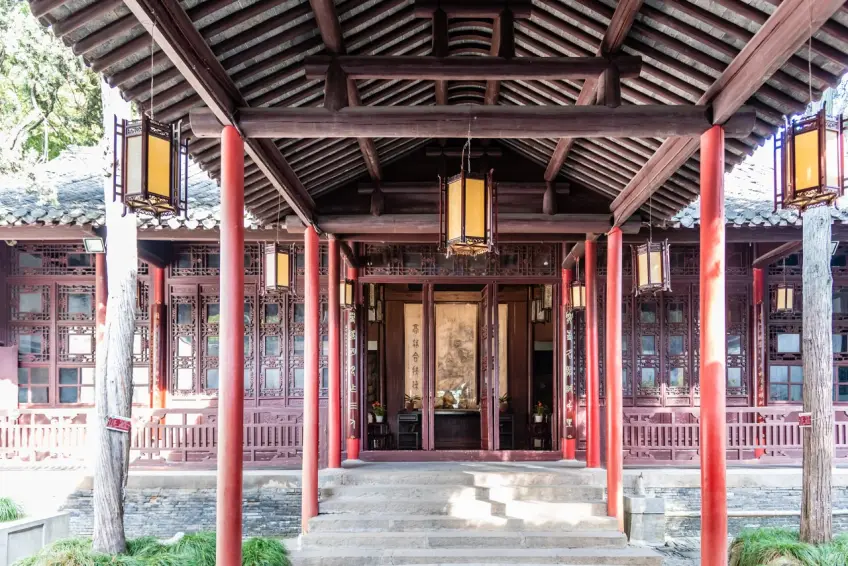
The red pillars and lanterns of the outer corridor echo the calligraphy and paintings inside, letting you feel the warmth of this scholars' courtyard even from outside.
Ouyang Shrine
Locals built this shrine to honor the benevolent governance of Prefect Ouyang Xiu. It features square beams and pillars with upturned eaves, while magnolias, osmanthus and crape myrtles accent the side courtyard.
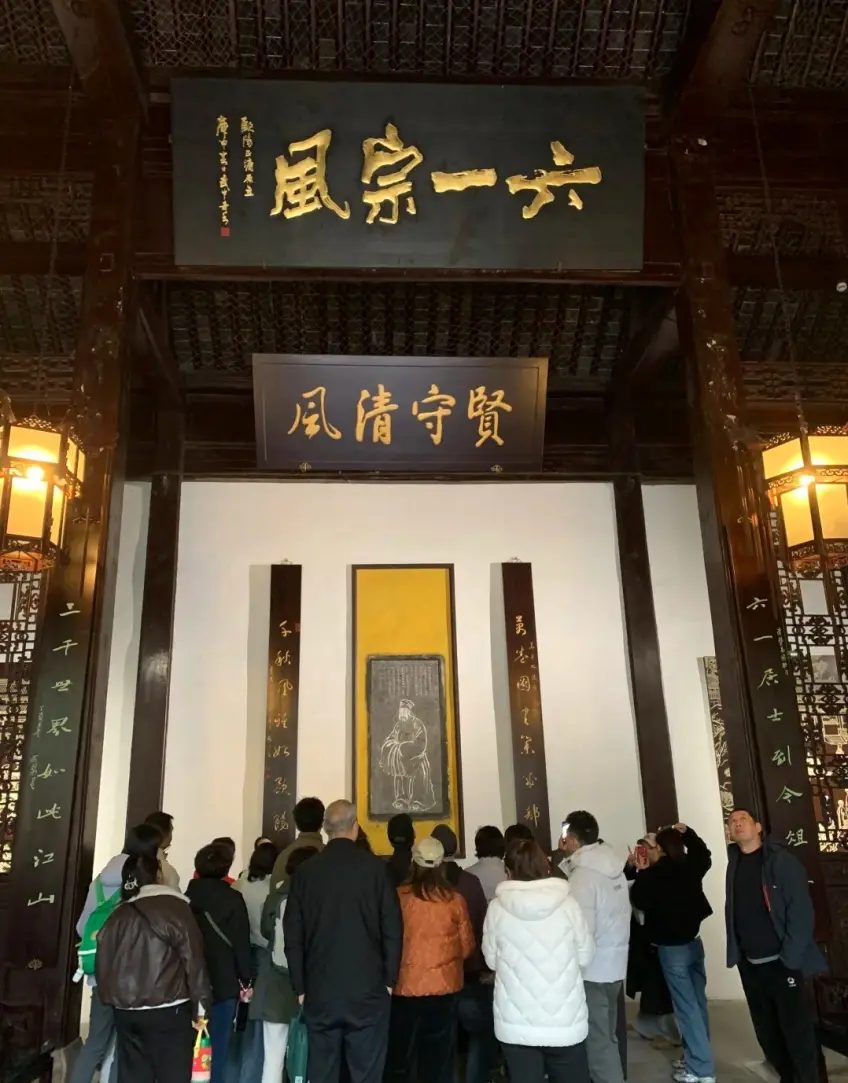
Guided groups often gather beneath plaques such as "Liuyi Zongfeng" inside the shrine, making it the most information-rich stop if you join a group tour or hire a guide.
Jianzhen Memorial Hall
Designed under the direction of Liang Sicheng and modeled after the Main Hall of Toshodai-ji Temple in Nara, the memorial hall, stele pavilion and cloisters recreate Tang dynasty style.
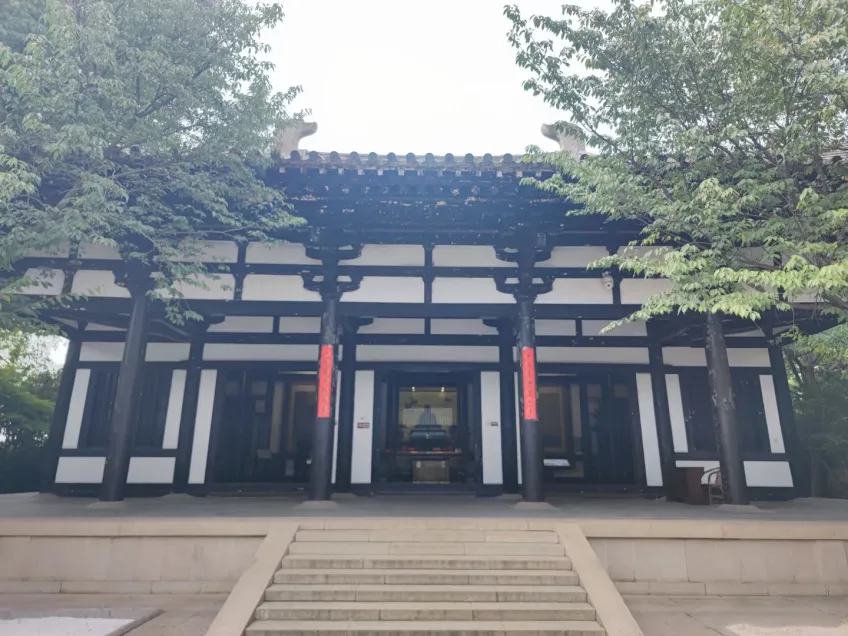
The striking black-and-white Tang-style facade and red couplets serve as a physical testament to the history of Sino-Japanese exchange.
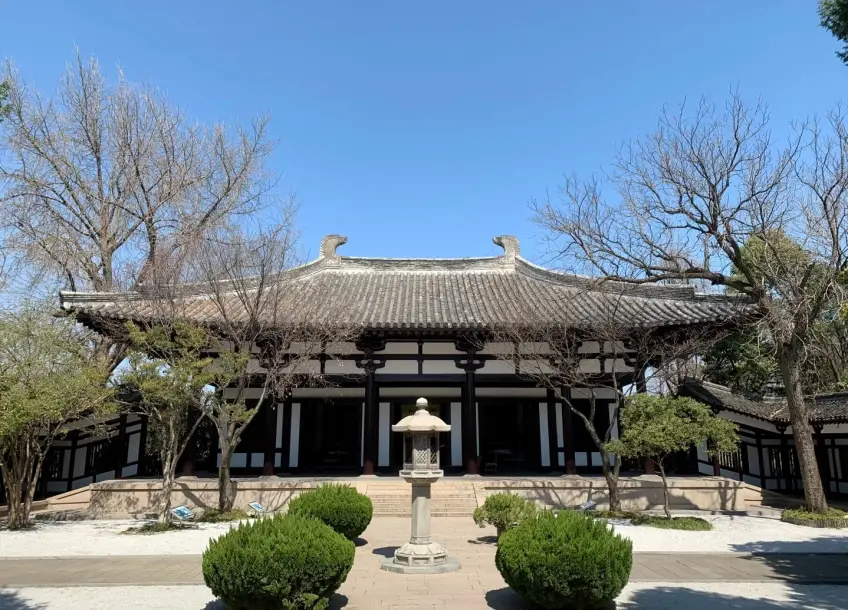
The stone lanterns in the courtyard, along with the white walls and gray tiles, create a peaceful atmosphere perfect for slowing down.
Climb Qiling Pagoda and visit the Fifth Spring in the West Garden
You can grab a vegetarian meal inside the temple to refuel before climbing the pagoda. Qiling Pagoda is the temple's landmark, and a separate ticket is required to climb it. From the top, you can look out over the city toward Slender West Lake.
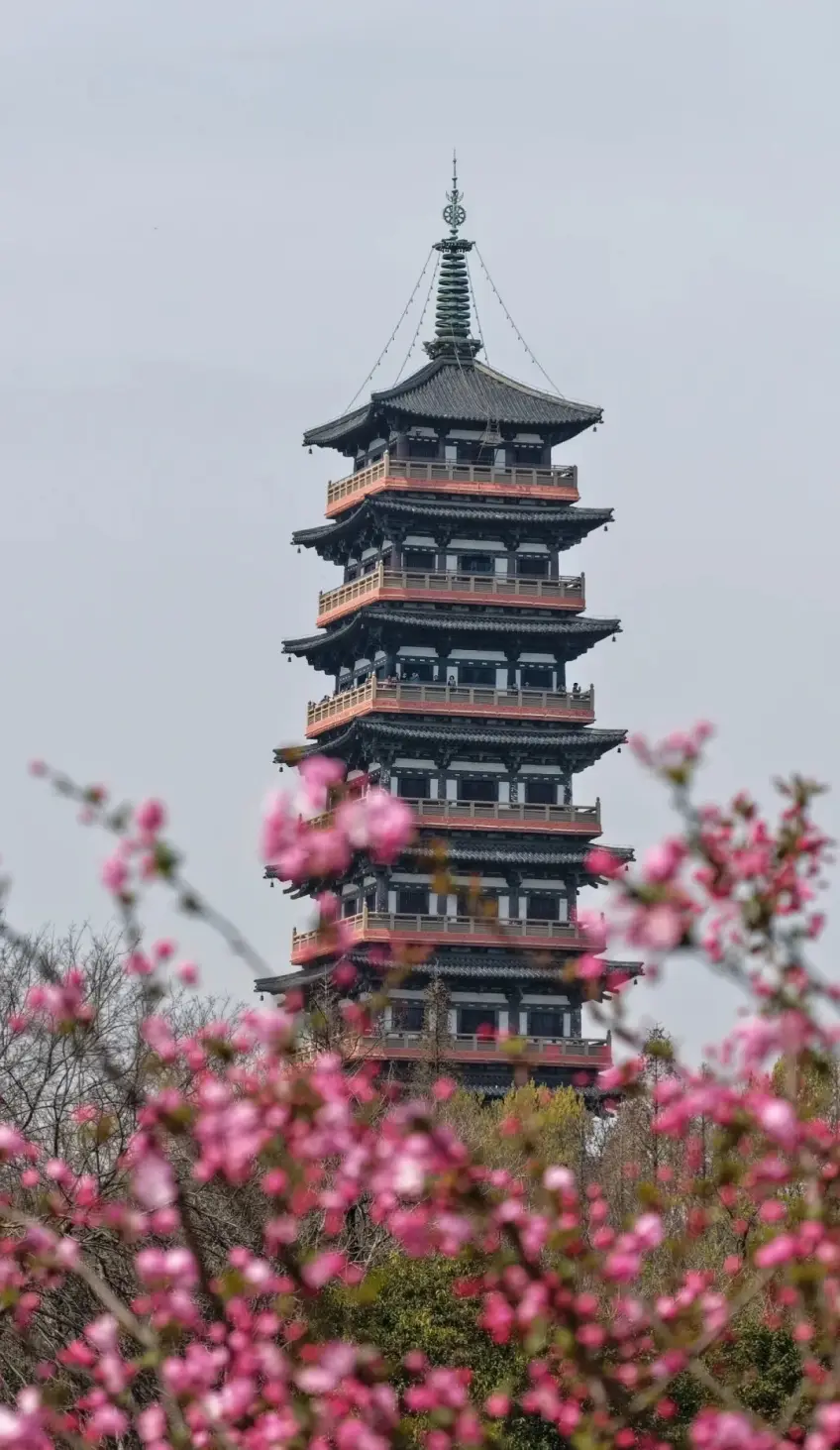
The pagoda looks especially photogenic during the spring blossom season. Hold on to the railing when it's windy.
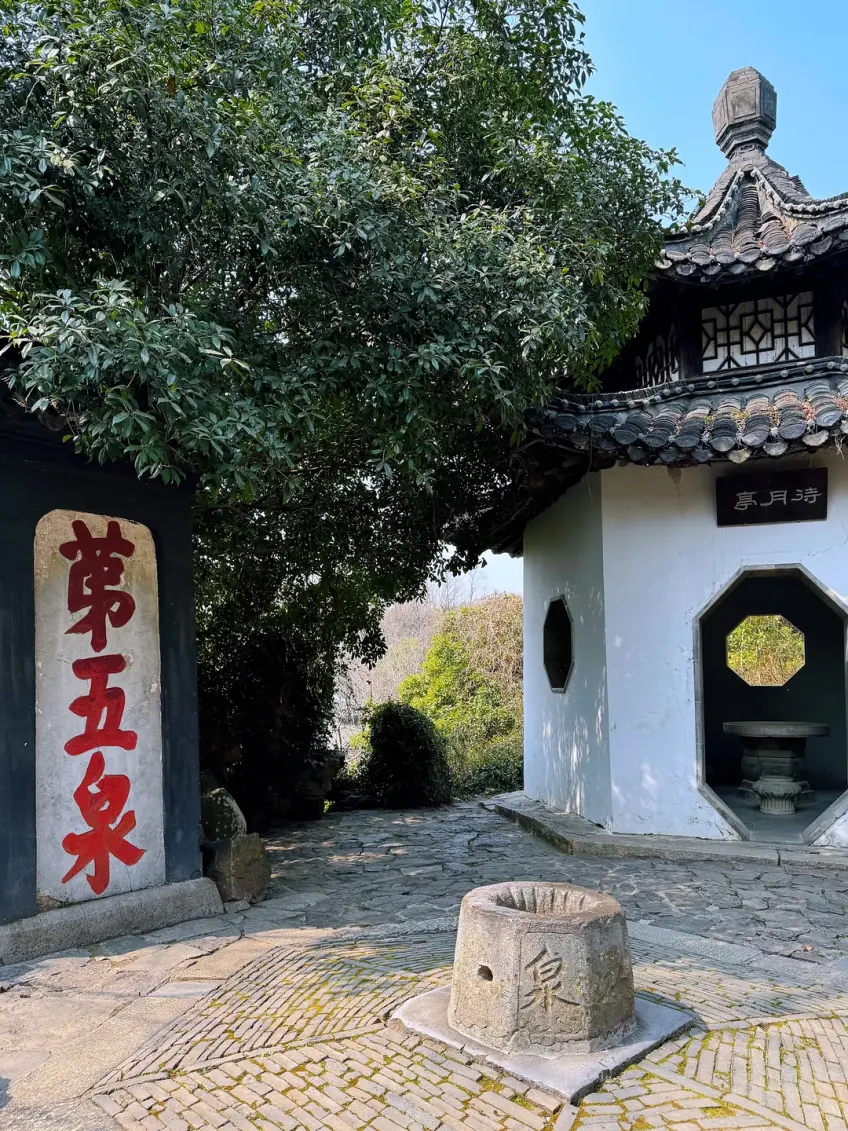
From the foot of the pagoda, head to the West Garden, where the "Fifth Spring Under Heaven" stele stands beside a well pavilion. You can rest over tea at Wuquan Teahouse (opening subject to on-site notice).
Wrapping up your day tour
Once you finish the main route, the temple grounds are fairly small. If you still have energy, continue to Slender West Lake or head back to your hotel to rest.
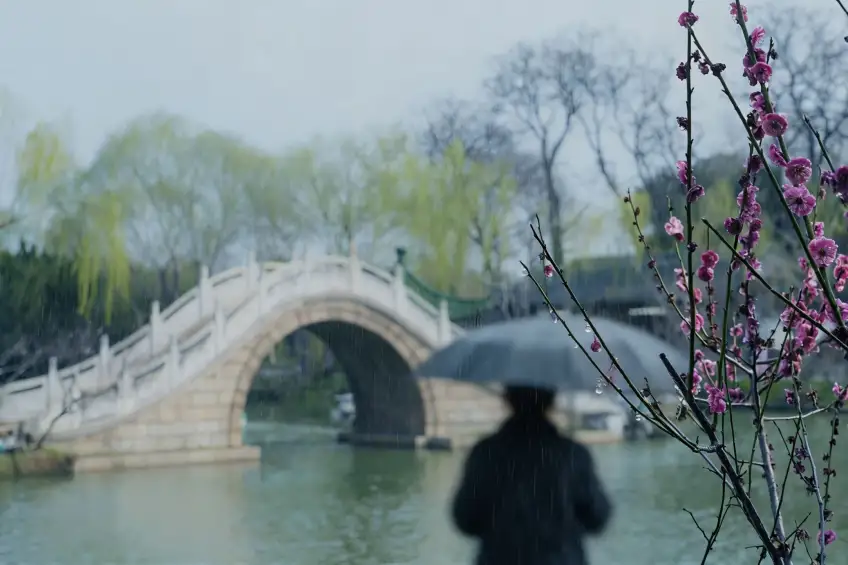
If it's drizzling after you leave the temple, the nearby lakes, bridges and willows take on a special charm in the Jiangnan rain. Add another stop depending on your energy level.
To plan nearby stops, vegetarian meals, and Huaiyang cuisine, just message customer service with your dates and group size.
Best time to visit
Seasons
Cherry and plum blossoms bloom from March to April, pairing beautifully with the ancient architecture. From September to October, sweet osmanthus and cool weather make for a leisurely stroll.
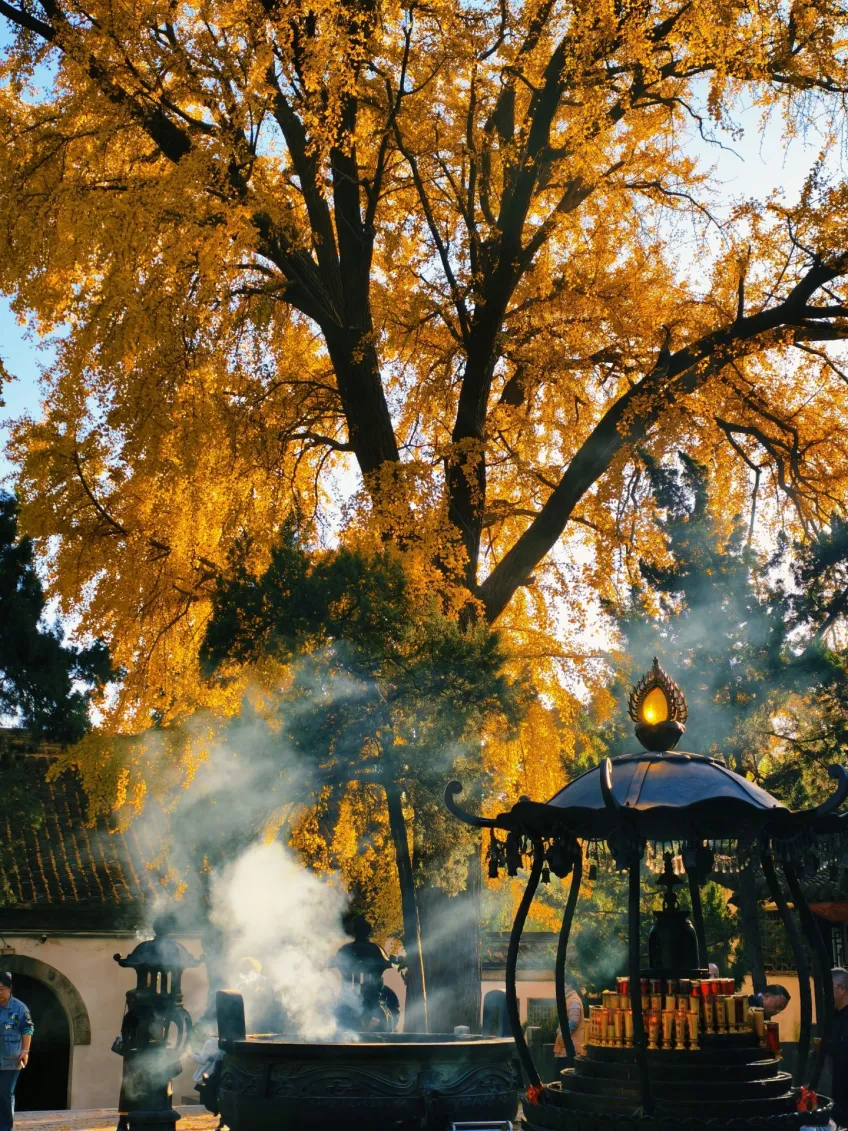
Autumn ginkgo leaves framed with incense smoke create one of the temple's most recognizable seasonal scenes.
Time of day
We recommend visiting between 8:00 and 11:00 AM, when crowds are smaller and the light is soft, ideal for photos and paying respects.
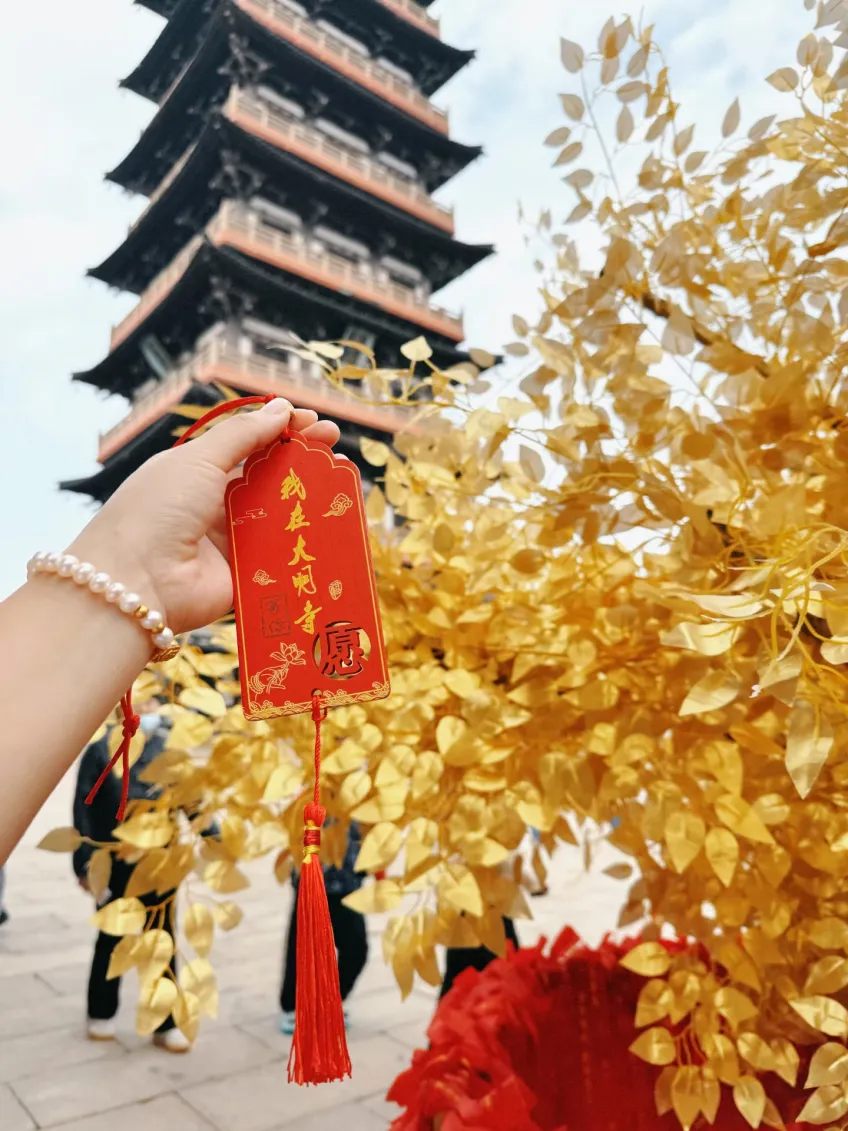
Framing a prayer plaque with the pagoda is a popular photo op. When writing your wish, follow the on-site hanging rules.
Special experiences
Praying at Qiling Pagoda
The pagoda area usually has prayer plaques, a wishing pool and other facilities where you can write down a wish or follow the on-site instructions for a short ritual.
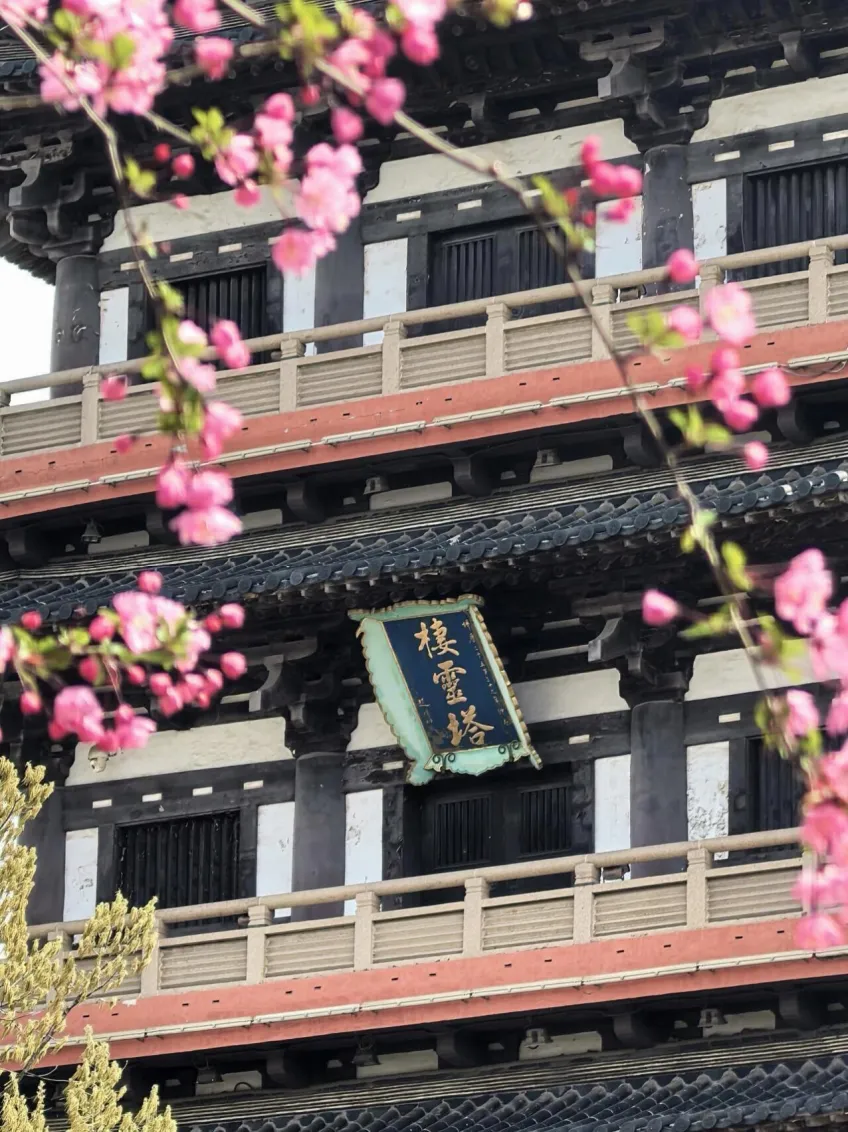
The "Qiling Pagoda" plaque on the tower is great for close-up shots. Watch your step on the stairs.
Bell ringing at the bell tower
With your pagoda climbing ticket, you can head to the Bell Tower to ring the bell (usually three strikes symbolize peace, health and good fortune). Session times and availability are subject to on-site announcements.
Offer incense and pray
The temple usually provides free incense; light it only in designated areas. Outside incense and candles are not allowed.
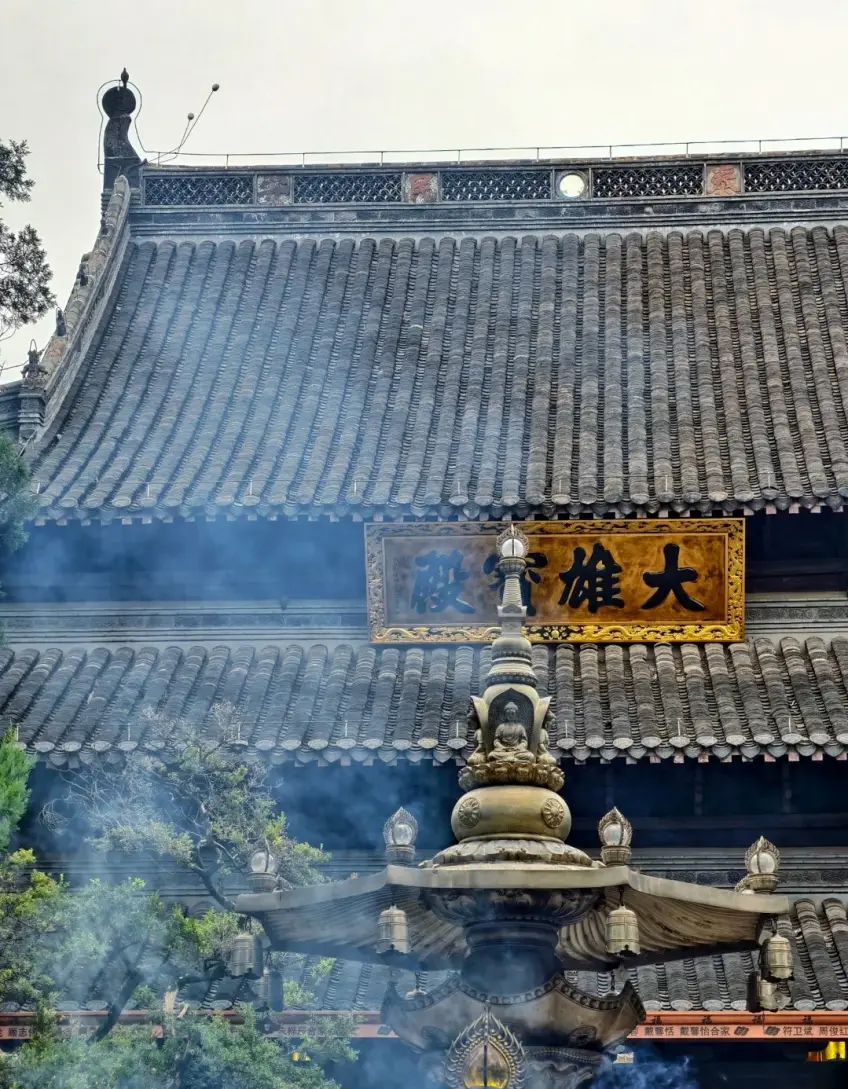
The incense smoke in front of the hall is part of the worship atmosphere. While waiting in line, watch out for the hot-surface warning signs.
Dining inside and outside the temple
Vegetarian meals inside the temple
The vegetarian restaurant has simple decor and serves staples like vegetarian wuding buns (with a five-ingredient diced filling) and mapo tofu. The handmade vegetarian buns at the vegetarian snack shop are great for breakfast or a snack.
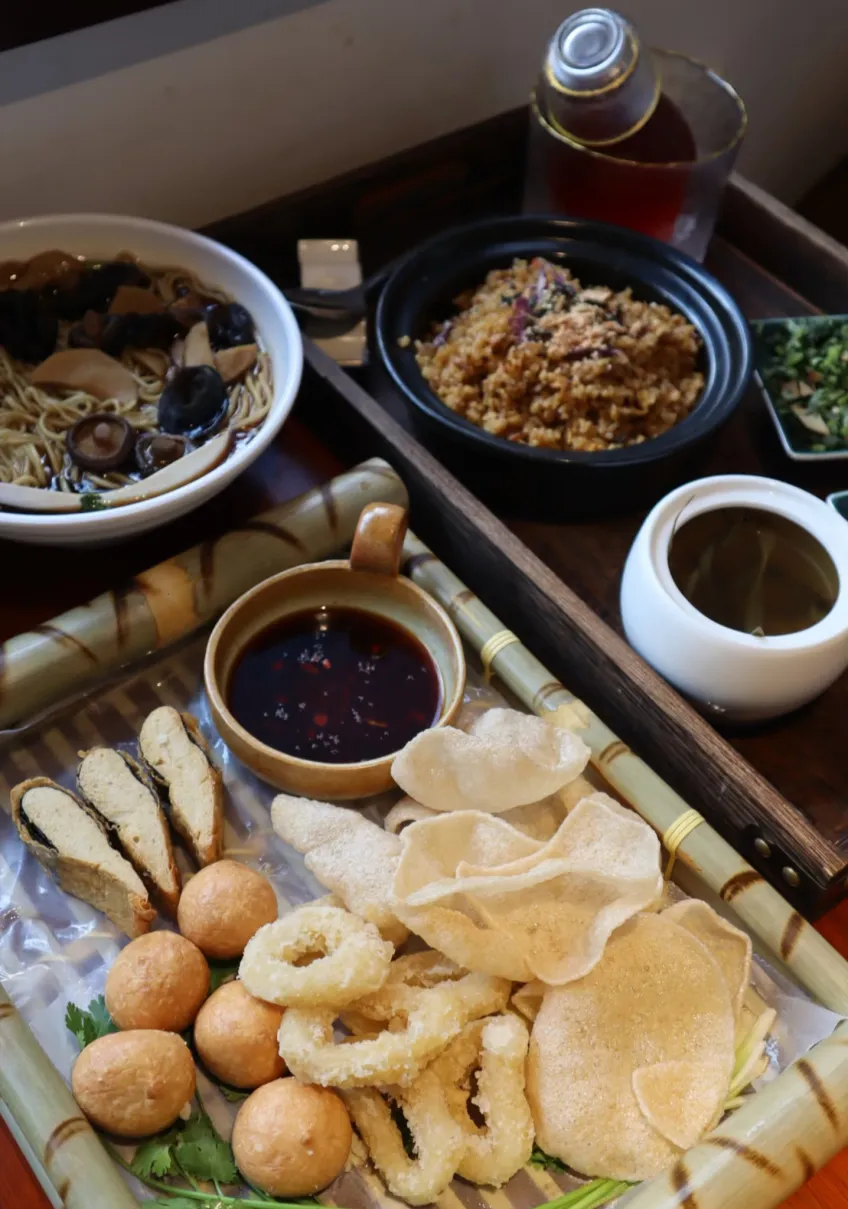
The vegetarian platter and noodle soup come in generous portions—eat first so you can climb the pagoda at a relaxed pace.
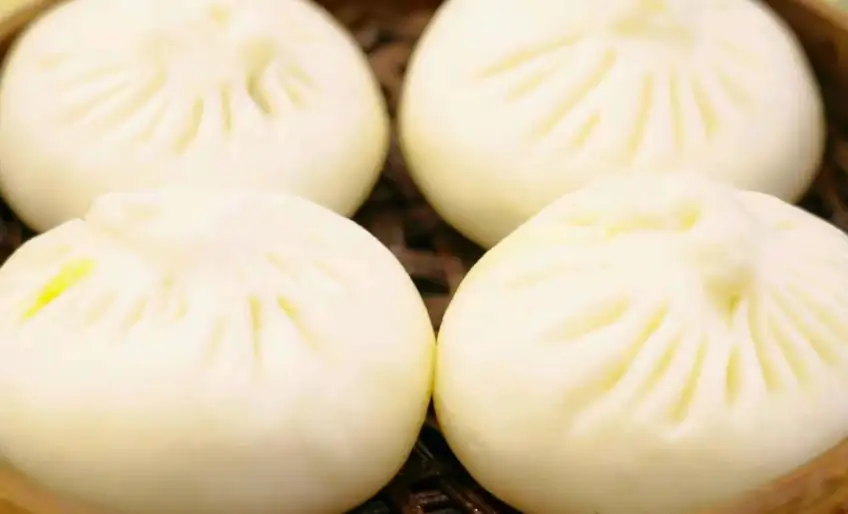
The steamed vegetarian buns come out piping hot, and you can also take them to go (shelf life and packaging are subject to in-store instructions).
Huaiyang cuisine outside the temple
A 10-minute taxi ride from the temple takes you to Yechun Teahouse near the south gate of Slender West Lake for a Huaiyang-style morning tea experience. Fried rice and crab roe lion's head meatballs are popular orders. Local restaurants along Shugang East Road are also good for a full meal.
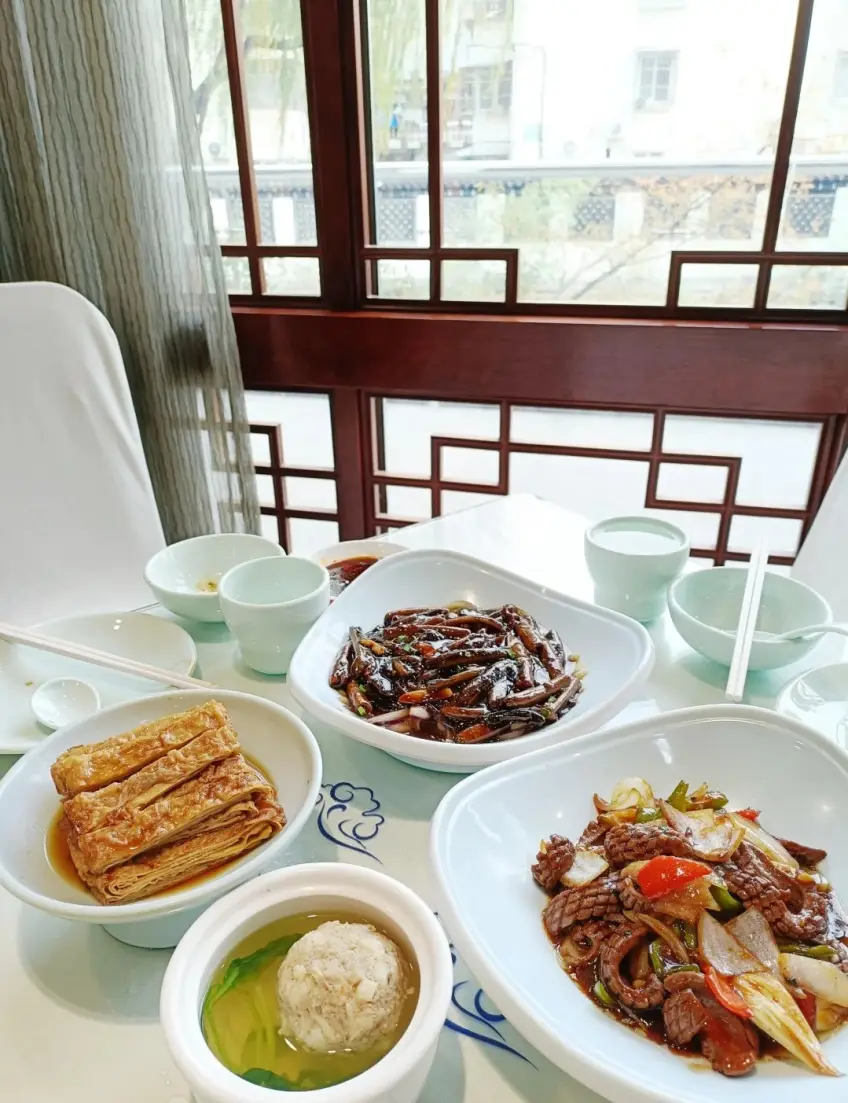
Watching the willows from a window seat while enjoying Huaiyang cuisine is a relaxing way to unwind after leaving the temple.
Souvenir recommendations
Cultural souvenirs
18-seed bracelets, amulets, plaque-themed souvenirs and more can be purchased at the temple shop. Be sure to check the materials and origins.
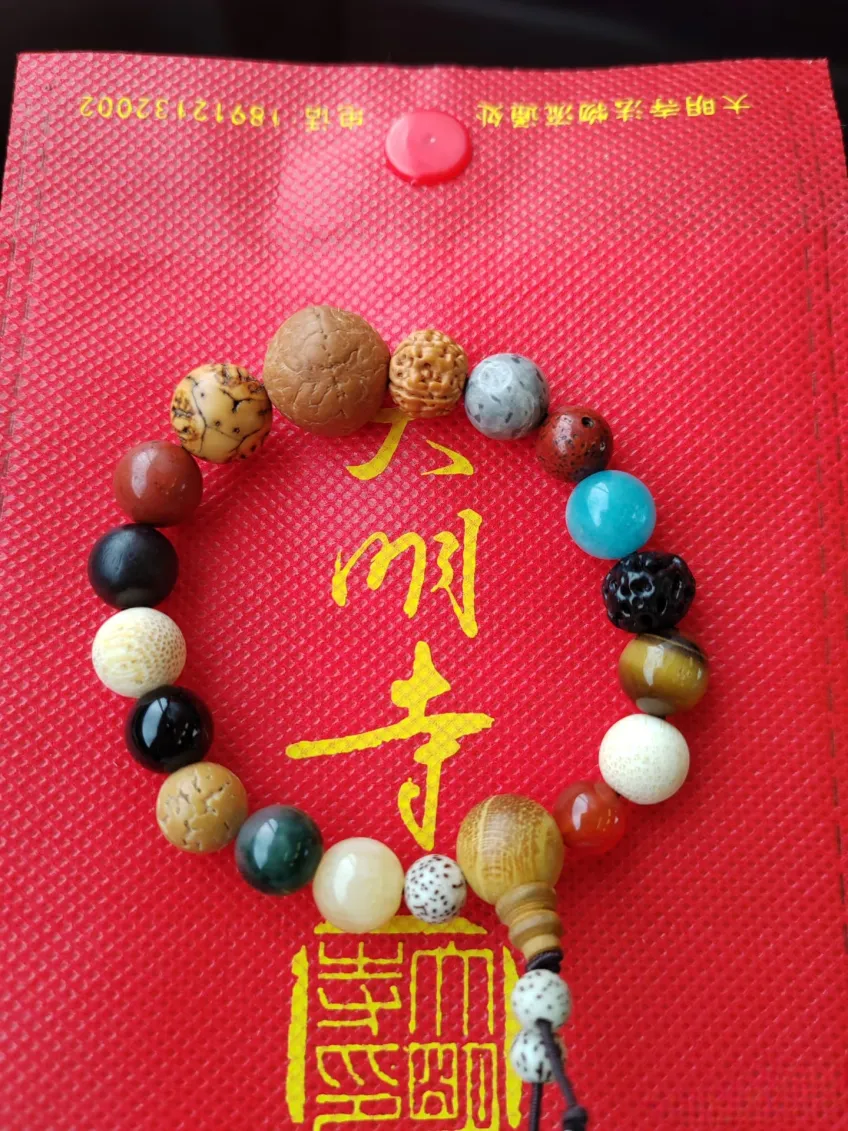
The colorful bracelets make great small souvenirs — compact and easy to slip into your bag.
Vegetarian food and local specialties
Vegetarian pastries make great souvenirs. For Yangzhou pickled vegetables, salted goose and other local specialties, vacuum-packed versions are best for long trips.
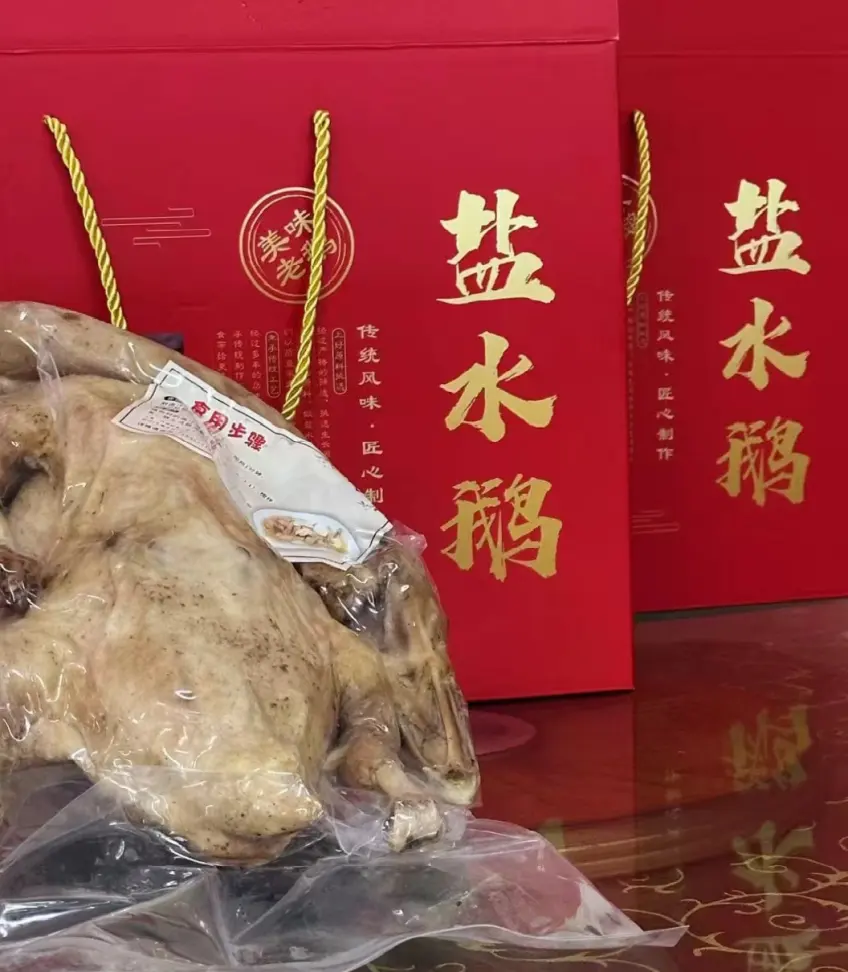
Salted goose gift boxes are easy to recognize. Check the production date and storage instructions when buying.
Tips for your visit
Religious etiquette
Keep quiet and silence your phone. Enter the temple through the side doors without stepping on the threshold—enter from the left and exit from the right. Do not touch Buddha statues, ritual objects or stone inscriptions, and turn off your flash when taking photos.
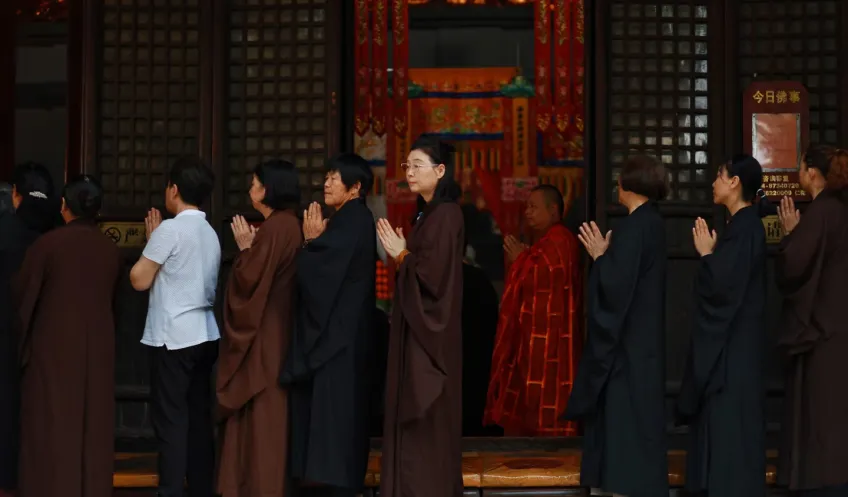
If you encounter a Buddhist ceremony or a line of people praying with palms together, please stand quietly to the side and do not cut through to take photos.
What to wear
Dress modestly. Avoid shorts, tank tops, flip-flops, and overly bright or flashy clothing; simple, understated outfits better suit the temple atmosphere.
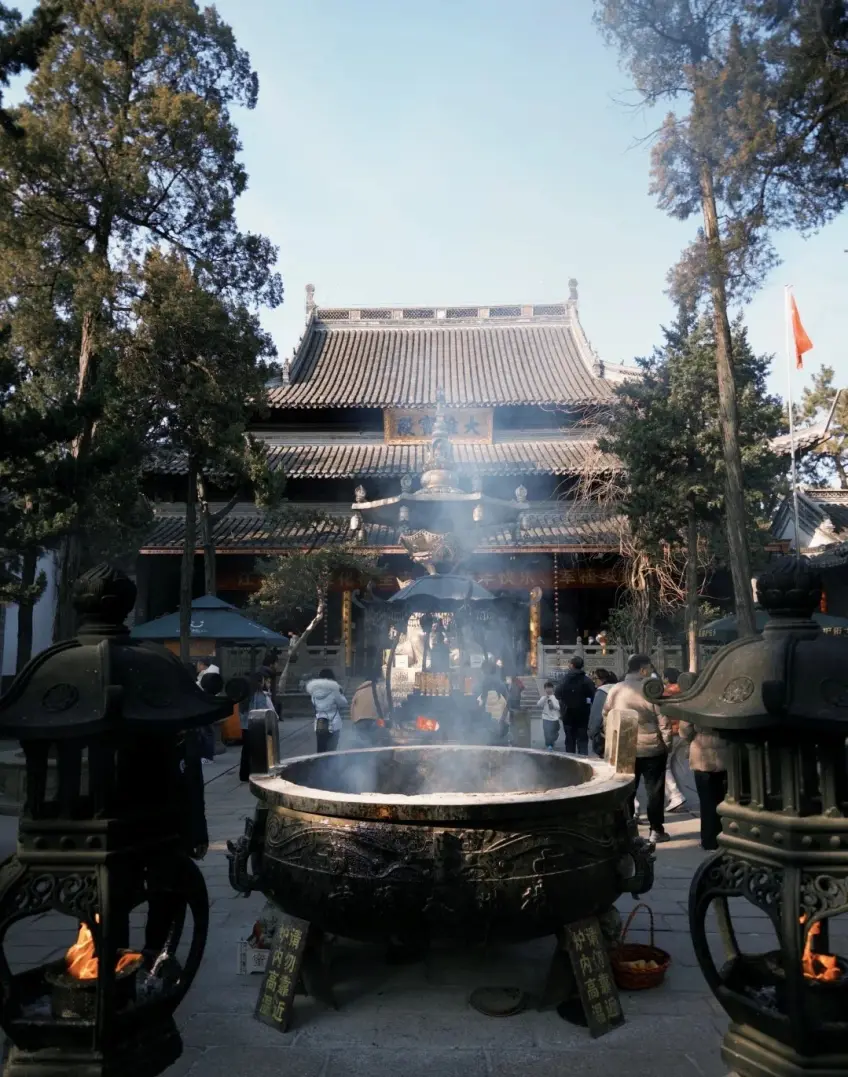
The incense burner area in front of the hall gets crowded. Watch your step and heed hot-surface warnings, and keep an eye on children.
Combining with nearby sights
Daming Temple is small, so if you have time left, add Slender West Lake, Guanyin Mountain, or the Yangzhou Museum. Just pick one route based on your interests: gardens, lake views, or cultural relics.

Just send a customer service card with the date, number of travelers, and departure station.