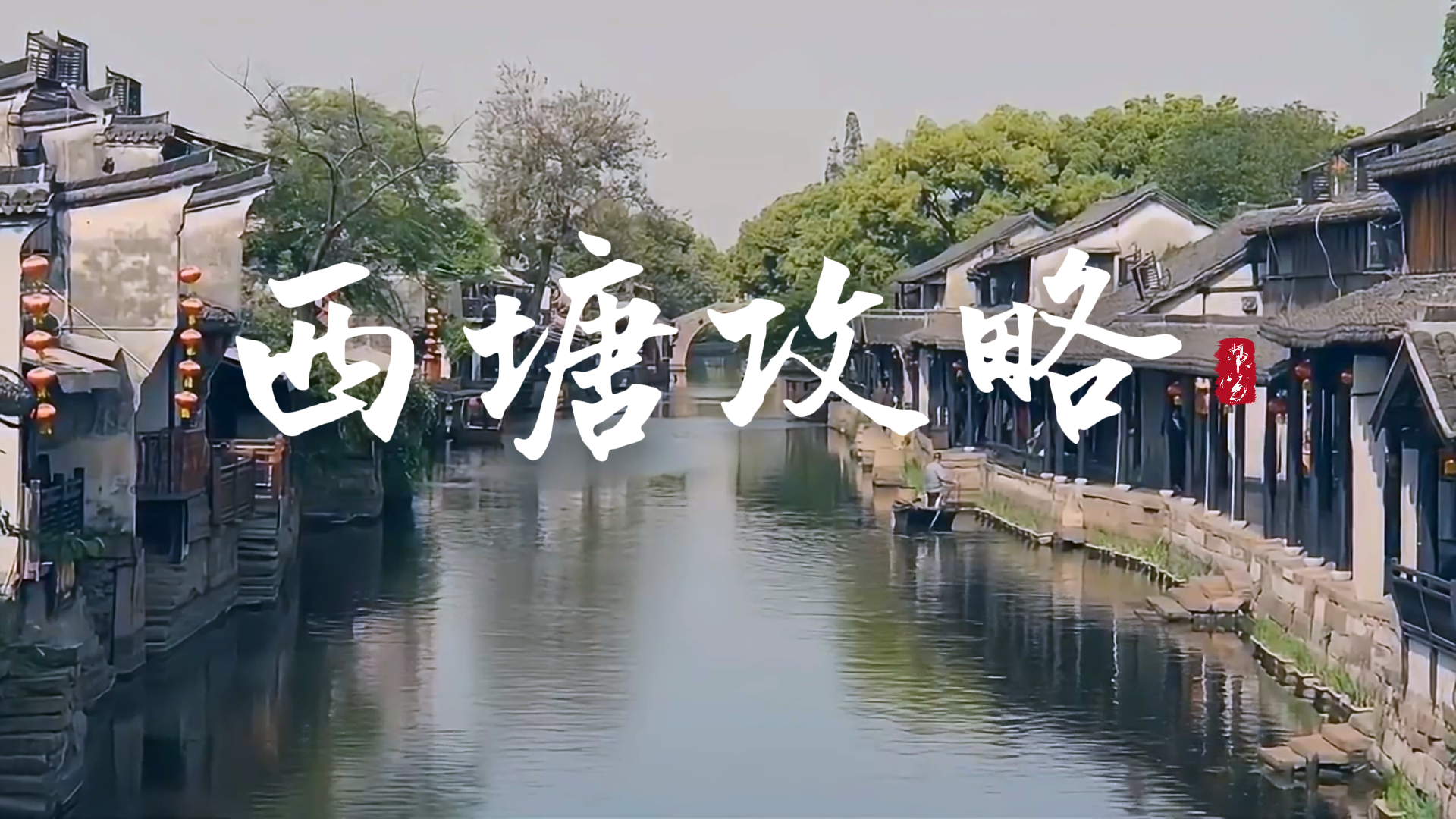

Xitang Ancient Town Guide: Transport, Tickets, Routes, Food and Hotels
Video highlights
- Take the high-speed train to Jiashan South Station, then transfer to bus 222 or a direct shuttle to Xitang.
- Direct buses to Xitang are available from Shanghai Pudong Airport and other locations.
- Built along the river, the Misty Rain Corridor stretches over 2,600 meters.
- Zuiyuan Garden, known as China's smallest garden, is a Ming dynasty scholar's garden.
- Shipi Lane is 68 meters long, with the narrowest point just 0.8 meters wide.
- We recommend staying in a waterside terrace room inside the scenic area or a guesthouse converted from a Ming- or Qing-era house.
Video transcript
Auto-generated from the video audio, some words may be inaccurate
View full transcript
In Jiangnan
ancient towns are scattered like stars
each with its own charm
But only Xitang Ancient Town
became famous without relying on age
size or layout
or a dramatic backstory
Because strolling through Xitang
isn't just viewing a watery scroll painting
it's like immersing yourself
in the most authentic
Chinese-style album
Now
follow this travel guide
and I'll play Xitang's soundtrack
for you in full
By high-speed rail
Jiashan South Station is the best choice
then transfer to bus 222
or the direct shuttle to Xitang Scenic Area
to reach Xitang
By bus
Shanghai South Bus Station
or Shanghai Pudong Airport
have direct coaches to Xitang
By car
Drive to Xitang from Shanghai, Hangzhou, Suzhou and other cities
To dive deep into the town's history
enter from the West Main Entrance at the Visitor Center
and head to Huguo Sui Liang Wang Temple
Built by locals to honor a Ming Dynasty grain transport official surnamed Jin
it's a unique spiritual landmark
Exit the temple and turn left
to reach Xitang's distinctive Misty Rain Corridor
Built along the river
it stretches over 2,600 meters
lined with teahouses
and specialty shops
and was a filming location for Mission: Impossible III
Walk about 200 meters along the corridor
to reach Zuiyuan
China's smallest garden
This exquisite Ming Dynasty scholar's garden
covers just a few dozen feet
yet stacks stones into mountains
channels water into pools
and arches bridges into rainbows
Exiting Zuiyuan
you'll see Xitang's oldest high bridge
Huanxiu Bridge
This iconic single-arch stone bridge
connects the Misty Rain Corridor
with bustling West Street
known as the town's center-stage bridge
Descend Huanxiu Bridge
and turn right
to reach Shipi Lane
Xitang's most famous "sliver of sky" alley
It's 68 meters long
and just 0.8 meters wide at its narrowest
Walking through it feels both claustrophobic and time-traveling
Exiting Shipi Lane
brings you to Wang Residence
also called Zhongfu Hall
one of the best-preserved Qing Dynasty private mansions in town
Not far from Wang Residence
is Xiyuan
Xitang's private garden
A classic late-Qing Jiangnan-style garden
with an exquisite layout where every step reveals a new view
it's the best place to experience Xitang's scholarly air
Continuing past Xiyuan
leads to Daomi Post
Daomi Post is an innovative fusion
of Nanpai Sanshu's official IP and local culture
a unique immersive experience space
Next, visit the Zhang Zheng Root Carving Art Museum
a private collection
housed in a typical Republican-era building
that ditches late-Qing styles
for soft, graceful arched corridors and window lattices
displaying Master Zhang Zheng's
personal root carvings
Continue along the main street
to the Eaves Tile Culture Exhibition Hall
An eaves tile (wadang)
is the outermost tile on a traditional roof
Small as it is
it waterproofs, drains rain
and protects the rafters
The hall displays tiles
from the Qin and Han dynasties through the Ming and Qing
revealing the art above the eaves
After viewing the tiles
cross Anjing Bridge
walk past Shaoxiang Port
and arrive at Ni Residence
the ancestral home of former Shanghai Vice Mayor Ni Tianzeng
The Ni family were local scholars
The residence has five courtyards
with a covered corridor in front
and a garden behind
The main hall is named
Chengqing Hall
Leaving Ni Residence
you reach Shengtang (Sage Hall)
which enshrines
Guan Yu, the God of Wealth and Martial Sage
As the Martial Sage
alongside Confucius the Literary Sage
both are revered as eternal teachers
hence "Sage Hall"
Across from Shengtang
is Vincent Fang's studio
a must-visit check-in spot for Jay Chou fans
If you love
Jay Chou's music
don't miss it
In the Qing Dynasty
the town's famous Meihua Sanbai liquor
was fragrant for miles
and poet Liu Yazi drank here often in the early Republic era
Xitang's liquor culture
is as old and renowned
as the town itself
Exiting the hall
walk back a few steps
and cross Wan'an Bridge
to reach the Button Museum
the world's first folk museum
dedicated to buttons
It houses thousands of Chinese and foreign buttons
from the Tang Dynasty to modern times
including pieces of great historical
and artistic value
Leaving the Button Museum
brings you to the final stop
Songzi Laifeng Bridge
Xitang's most romantic covered bridge
rich in folk symbolism
A decorative wall divides the deck
into left and right passages
Legend says men take the left side (Songzi)
to pray for a son
and women take the right (Laifeng)
to pray for a daughter
a fun and auspicious tradition
If you're not in a hurry
grab some local food nearby
wait for nightfall
then return to the Misty Rain Corridor
to enjoy Xitang's nightscape
That way
your Xitang trip will have no regrets
Xitang's beauty lies in its dual appeal
day and night offer two different thrills
To fully appreciate this watery album
we highly recommend staying overnight
Stay inside the scenic area
ideally in a waterfront terrace room
where you can photograph sculling boats and red lanterns right from your balcony
Or choose a guesthouse converted from a Ming or Qing mansion
to experience carved beds and antique furniture
With that
every track on Xitang Ancient Town's Chinese-style album
has played out
but Xitang's melody
is still being composed day and night
We invite you to come in person
and press your own play button