
Video highlights
- Watch artisans hand-paint Huadiao wine jars live at the Yellow Wine Museum
- Shaoxing yin gao are made from water-milled glutinous rice flour filled with red bean paste or sesame, pressed in molds, and steamed
- The Luzhen Stage in Keyan Scenic Area performs the "Luzhen Village Opera" daily at set times.
- Shengzhou is the birthplace of Yue Opera, with professional actors performing classic plays daily.
Video transcript
Auto-generated from the video audio, some words may be inaccurate
View full transcript
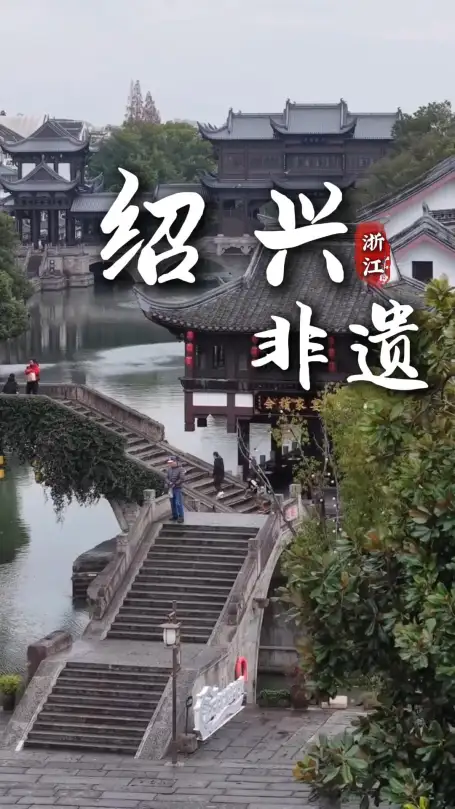
Shaoxing's intangible cultural heritage
is deeply rooted in the everyday life of the old city,
between the water town charm of Keqiao
and the Yue culture of Shengzhou.
With rice wine as its base,
soy sauce as its pulse,
and daily life as its soul,
it weaves together a Jiangnan lifestyle
you can see, touch, and taste.
There are countless wines in the world,
each with its own character and flavor,
but only rice wine
holds the warmest poetry
of Shaoxing's people.
Unlike beer,
it has no crisp, fizzy bite.
Nor is it like baijiu—
bold, straightforward,
fiery on the palate
with an explosive aroma.
Instead, it is mellow and smooth,
slightly sweet with a hint of rice fragrance.
It goes down easily,
with a slow, lingering warmth
that grows richer over time.
Rice wine never overwhelms with intensity
or relies on sharpness to impress.
Its gentle richness
makes it a thousand-year-old brew
perfectly suited to the Shaoxing palate.
Shaoxing Huadiao wine,
a derivative intangible heritage of rice wine,
is defined by the hand-painted artistry on its jars.
At the Yellow Wine Museum
or century-old wineries in the old town,
you can watch heritage artisans
paint Huadiao jars live.
Using clay jars as their canvas
and mineral pigments for hand-painting,
their delicate brushwork and rustic colors
make every jar a one-of-a-kind artwork.
The subtle sweetness of Shaoxing Yin Gao, or stamped rice cake,
is not to be missed.
Dating back to the Ming and Qing dynasties,
this traditional pastry is made by artisans
using water-milled glutinous rice flour
filled with red bean paste or sesame,
then pressed into heirloom wooden molds.
Once unmolded,
the surface reveals intricate traditional patterns.
Steamed to perfection,
it is soft, smooth,
delicately sweet without being cloying,
and full of pure rice fragrance—
a homestyle taste passed down
through generations in Shaoxing.
Luzhen in the Keyan Scenic Area
is the only real-life venue
for experiencing Luzhen Shexi, or street theater.
Rebuilt from the water town scenes described by Lu Xun,
it serves as a key platform
for preserving Shaoxing's theatrical traditions.
The Luzhen stage hosts scheduled performances daily,
using the actual water town as a backdrop
while actors recreate characters from Lu Xun's stories,
letting you immerse yourself
in the folk customs of his writings.
Shengzhou,
the birthplace of Yue Opera,
preserves the authentic essence of Shaoxing Yue Opera.
Professional performers
stage classic Yue Opera productions daily,
with "The Butterfly Lovers" (Liang Shanbo and Zhu Yingtai)
as a regular show
featuring beloved excerpts.
With melodious singing,
flowing water sleeves,
and soft Wu dialect vocals,
every moment brims with Jiangnan tenderness.
Walking through Shaoxing

