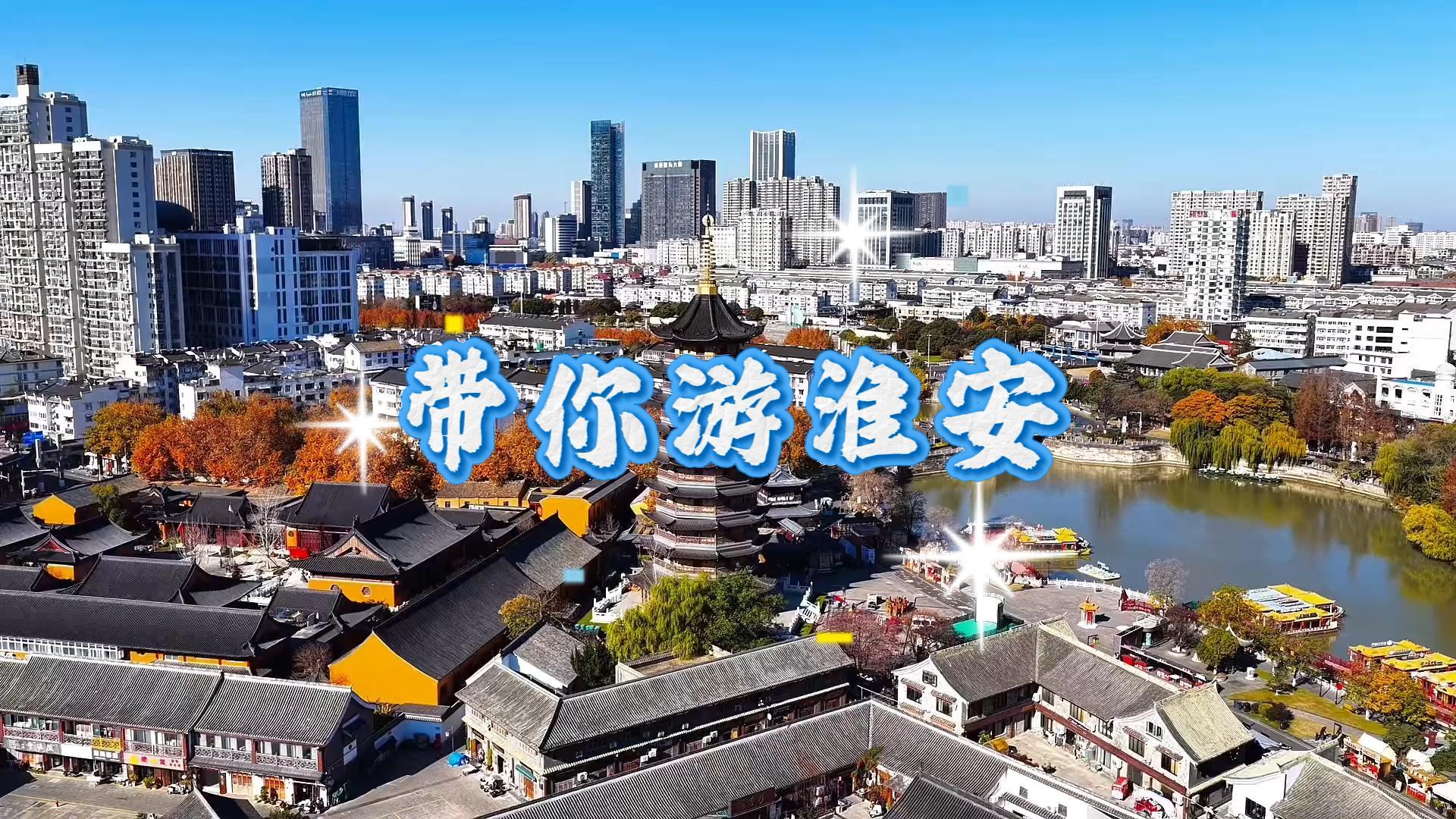

Huai'an Day Tour | Linking the China Caoyun (Grain Transport) Museum, Prefectural Office, Ancient Town and Li Canal to Discover the History and Local Life of the Canal Capital
Video highlights
- The China Caoyun (Grain Transport) Museum and the ruins of the Grain Transport Governor's Office to its south jointly showcase the history of grain transport.
- The Huai'an Prefecture Government Office was first built in the third year of the Hongwu reign of the Ming Dynasty and is one of only two surviving prefectural offices in China.
- Founded in the eighth year of the Daoguang reign of the Qing Dynasty, Wenlou serves crab roe soup dumplings made with twelve ingredients.
- Qingong meatballs are pounded with iron rods instead of chopped with a knife.
- The Li Canal Cultural Corridor stretches 32 km. You can reach it from Hexia Ancient Town by taxi or boat.
- Banzha Gangzi noodles are pressed by hand using a wooden pole.
Video transcript
Auto-generated from the video audio, some words may be inaccurate
View full transcript
If you only have one day and want to understand the past and present of Huai'an, the Canal Capital, then this route connecting the China Caoyun (Grain Transport) Museum, Hexia Ancient Town, the Huai'an Prefecture Government Office, the Li Canal and Banzha is your best choice. Let's explore Huai'an together.
Stop one: China Caoyun (Grain Transport) Museum. The China Caoyun (Grain Transport) Museum sits in the center of Huai'an Old Town in Jiangsu. The Grain Transport Governor's Office ruins to its south were one of China's major archaeological discoveries of 2002. Together, the museum and the ruins present the full thousand-year history of canal transport. The exterior features Ming and Qing architecture, and the exhibition space spans a ground floor and a basement level with six themed halls: the Prologue Hall, Relics Hall, Vision Hall, Huai'an Hall, Canal Hall and History Hall.
Stop two: Huai'an Prefecture Government Office. Built in the third year of the Hongwu reign of the Ming Dynasty, the Huai'an Prefecture Government Office has a history of over 650 years and is one of only two surviving prefectural offices in China. During the Ming and Qing dynasties, Huai'an Prefecture governed nine counties and two prefectures including Ganyu, Lianyungang, Yancheng and Huai'an, making it the largest prefecture in Jiangsu by area. Covering 50,000 square meters, it was built strictly according to Ming and Qing local government standards, following a central-axis symmetrical layout with official halls in front and living quarters behind. It is divided into eastern, central and western routes. The central route holds core buildings such as the Main Hall and Second Hall; the eastern route was where civil officials received guests; the western route housed military offices and judicial courts, reflecting the traditional "civil on the left, military on the right" layout concept.
Stop three: Hexia Ancient Town. Also known as Beichen Town, Hexia Ancient Town is part of the Zhou Enlai Hometown Scenic Area. It is a classic thousand-year-old town that rose and declined with the canal, dating back 2,500 years. During the Ming and Qing dynasties, it produced 67 jinshi scholars, 123 juren provincial graduates and 12 hanlin academicians, earning it the reputation of having "all three top examination honors." Located at the crossroads of north-south travel, it developed a unique food culture and is one of the key birthplaces of Huaiyang cuisine. We recommend having lunch here—try the crab roe soup dumplings at Wenlou. Wenlou is the most famous century-old brand in Hexia Ancient Town, founded in the eighth year of the Daoguang reign of the Qing Dynasty, nearly 200 years ago. Its signature dish is the crab roe soup dumpling: paper-thin skin filled with rich broth and twelve ingredients including pork skin, diced chicken, crab roe, dried shrimp, bamboo shoots and Shaoxing wine. Besides the dumplings, try soft-braised eel. "Changyu" is the local name for eel in Huai'an and Funing. On October 1, 1949, at the founding banquet of the People's Republic, soft-braised eel was served as the first hot dish, earning it the title "the Republic's First Dish." You can order it alone or with eel noodles. Qingong meatballs are also worth trying. This traditional Huai'an dish is named after Qingong Town and is famous for its incredible bounce and tender-crisp texture—locals say they "bounce three times when dropped on the floor." What makes them unique is the technique: instead of chopping, the meat is pounded with iron rods, a method called "lei rou" that is the soul of the dish.
Stop four: Li Canal Cultural Corridor. Stretching 32 kilometers, the Li Canal Cultural Corridor is an international exchange space combining high-end forums, cultural tourism, eco-wellness, business leisure and themed parks. Located in Qingjiangpu District, Huai'an, it's best reached from Hexia Ancient Town by taxi or by taking a Li Canal cruise. The cruise is the core experience of the scenic area, departing from Zhakou Cruise Terminal in Qingjiangpu District. The route covers the Jinhua section of the Li Canal and connects sights like Qingjiang Sluice, Zhongzhou Island, Qingjiangpu Tower and Hexia Ancient Town.
Stop five: Huai'an Banzha Cultural Experience Center. This underground venue is the core of the Grand Canal Banzha Ruins Park, featuring seven themed halls: A Glance at Banzha, Spring and Autumn Records, Tales of the Ancient Sluice, Huai Shang Customs, Phoenix Legend, Moments and Eternity, and Secrets of the Ruins. In the 13th year of the Yongle reign of the Ming Dynasty, Chen Xuan, the Canal Transport Governor, dug a channel at Qingjiang. To ensure smooth passage for grain boats, he built four sluices: Qingjiang, Fuxing, Xinzhuang and one other. When water control proved insufficient, a fifth sluice was added in 1416. Because the gate body and canal bed lining were mainly made of wooden planks (ban), it was called Banzha. In the 39th year of the Qianlong reign of the Qing Dynasty, the Yellow River breached at Laobakou in Qingjiangpu, flooding Banzha Town and burying the area under silt. In 2014, during construction of the Huai'an Banzha Heritage Street project, large numbers of stone slabs were found underground, bringing the ruins back to light. Banzha is the only well-preserved wooden-lined sluice ruin discovered in China so far.
After the tour, grab a bite. Around the Huai'an Banzha Cultural Experience Center you'll find plenty of authentic Huai'an flavors. Top recommendation: Banzha gangzi noodles. This traditional noodle dish originated in Hebei Village, Banzha Town, Huai'an District. Unlike hand-rolled or machine-made noodles, Banzha gangzi noodles are pressed entirely by jumping on a wooden pole, giving them a chewy, smooth texture. Locals praise them saying, "One bowl of Banzha gangzi noodles makes all of Jianghuai drool." Huai'an, the Canal Capital, deserves a full day of slow walking and savoring.