
Niushou Mountain is in Jiangning District in southern Nanjing, about a 20- to 30-minute taxi ride from Nanjing South Railway Station. The three main sights are Foding Palace, which enshrines the parietal bone relic of the Buddha; Foding Temple, built into the hillside; and Foding Pagoda at the summit. The scenic area usually opens at 8:30 and stops admitting visitors at 16:30. Adult tickets cost around ¥145 if booked online in advance, and half a day to a full day is ideal for a visit.
Who should go
Buddhist pilgrims: The parietal bone relic holds immense significance in Buddhism, and many overseas Chinese Buddhists make special trips to pay their respects. If you want to venerate the relic, check the opening dates for that year in advance—expect long lines on those days.
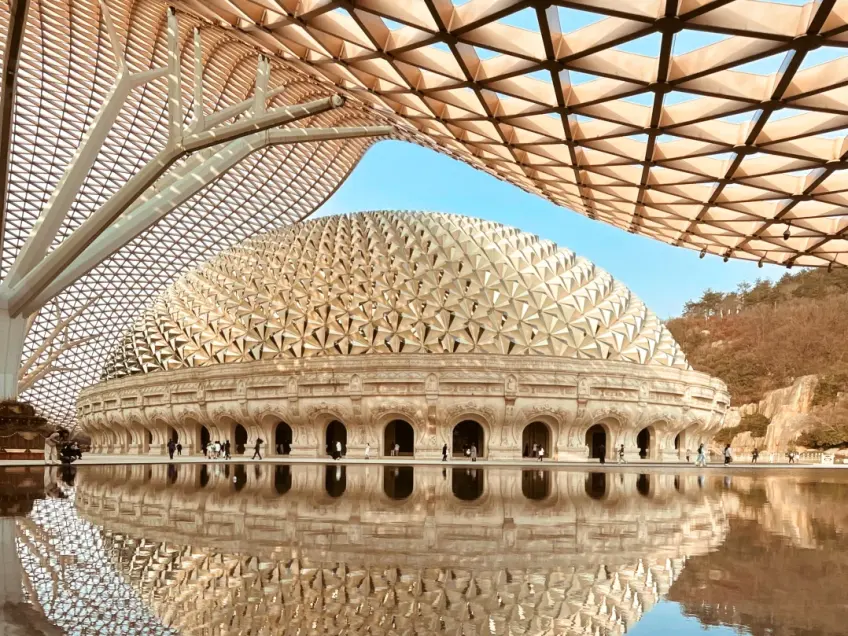
Architecture and design lovers: Foding Palace transformed an abandoned quarry into a massive underground hall, filled with intricate domes, lighting, and carvings. Even if you're not Buddhist, the space itself is deeply moving.
History buffs: Southern Dynasty temples, a Ming dynasty brick pagoda, Zheng He's tomb, and Yue Fei's old fortifications are all on this mountain. Niushou Mountain is essentially a hill that condenses 1,500 years of Nanjing history.
Families with older relatives: The scenic area has sightseeing buses, and the indoor Usnisa Palace protects you from sun and rain. It's much easier for seniors than climbing the steps at Sun Yat-sen Mausoleum, making it one of the few large attractions in Nanjing suited to a leisurely pace.
What kind of place is Niushou Mountain?
Niushou Mountain isn't very tall—its main peak rises about 243 meters above sea level. It originally had two peaks, east and west, which looked like a pair of ox horns from afar, hence the name "Niushou" (Ox Head). In ancient times, it was also called Tianque Mountain. Locals often say, "Spring at Niushou, autumn at Qixia." In spring, the flowers and trees on Niushou Mountain are at their best, making it a traditional spot for Nanjing residents to enjoy the season.
The mountain's Buddhist history dates back to 503 AD (the second year of the Tianjian era of the Liang dynasty), when Foku Temple was first built. During the Zhengtong era of the Ming dynasty, it was renamed Hongjue Temple, and the Hongjue Temple Pagoda beside it still stands today. From the 1930s to the 1950s, iron ore mining on the western peak left a pit over 60 meters deep, leaving only the eastern peak. The Usnisa Palace you see today was built right inside this abandoned mine pit, using architecture to "restore" the missing peak.
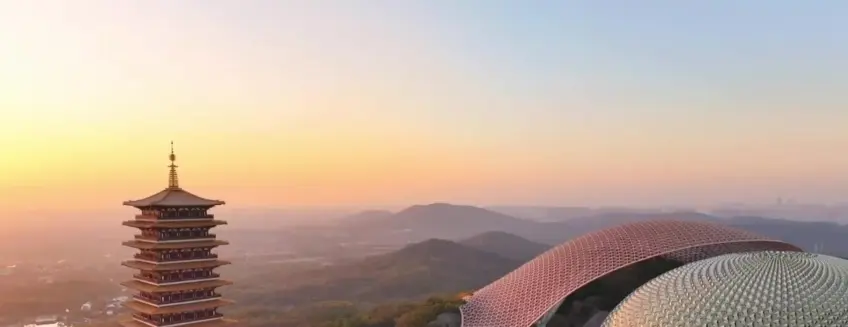
In 2008, a parietal bone relic of the Buddha was unearthed from the underground palace at the Changgan Temple ruins in Nanjing (the predecessor of Da Bao'en Temple). On October 27, 2015, the relic was transferred from Qixia Temple to the Usnisa Palace on Niushou Mountain for permanent enshrinement, and the Niushou Mountain Cultural Tourism Zone opened the same day. For Buddhists, it is an important pilgrimage site; for general visitors, the Usnisa Palace itself is a stunning piece of modern architecture.
Usnisa Palace: admire the exterior first, then head underground
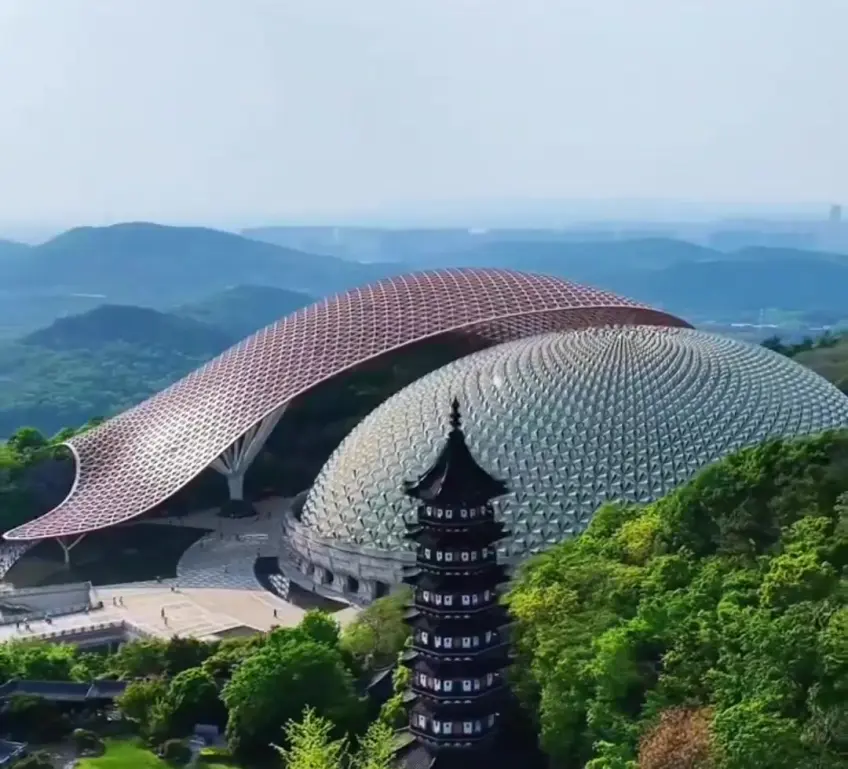
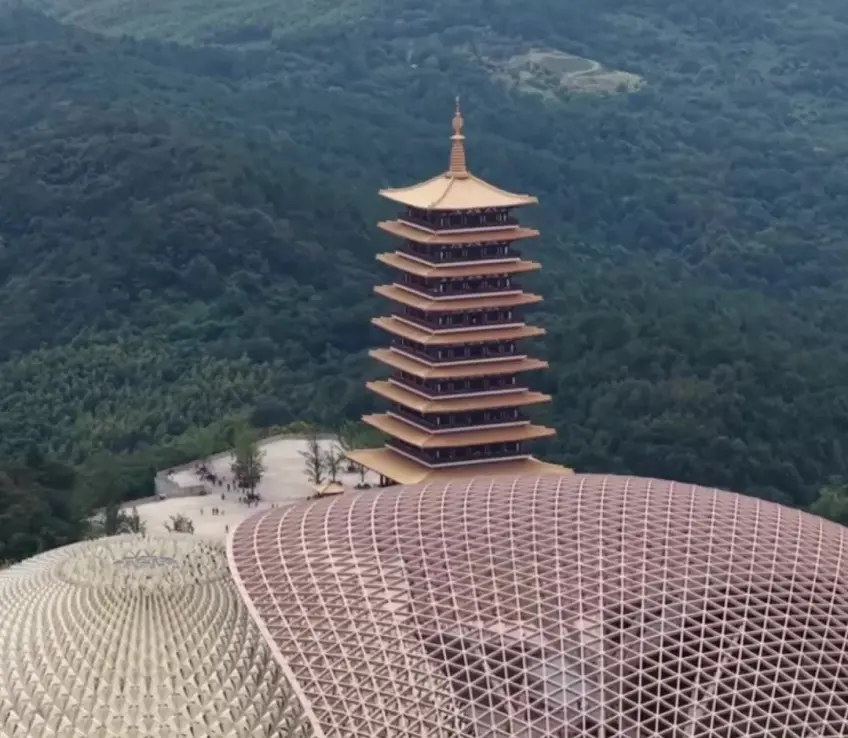
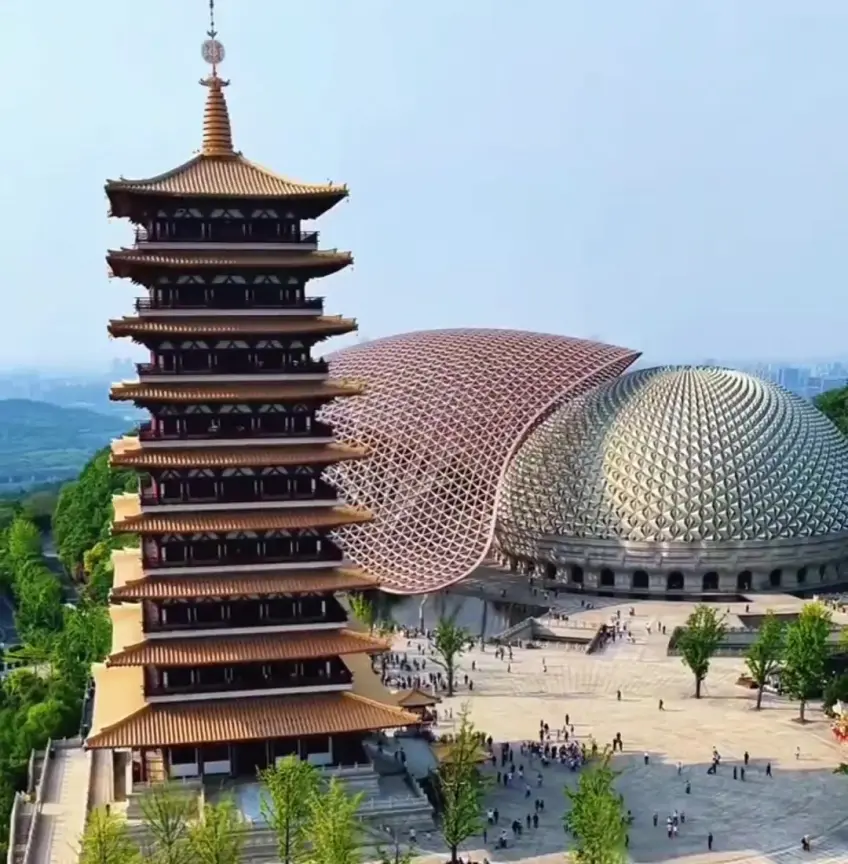
Foding Palace features a double-layered dome: the outer layer drapes down like a monk's robe, while the inner layer is a large dome studded with small lotus motifs. The building is about 220 meters long, 160 meters wide and 89 meters tall, with most of its space hidden underground—reaching six stories at its deepest point. From the plaza, the dome blends seamlessly into the hillside, making it hard to believe it sits inside an old quarry.
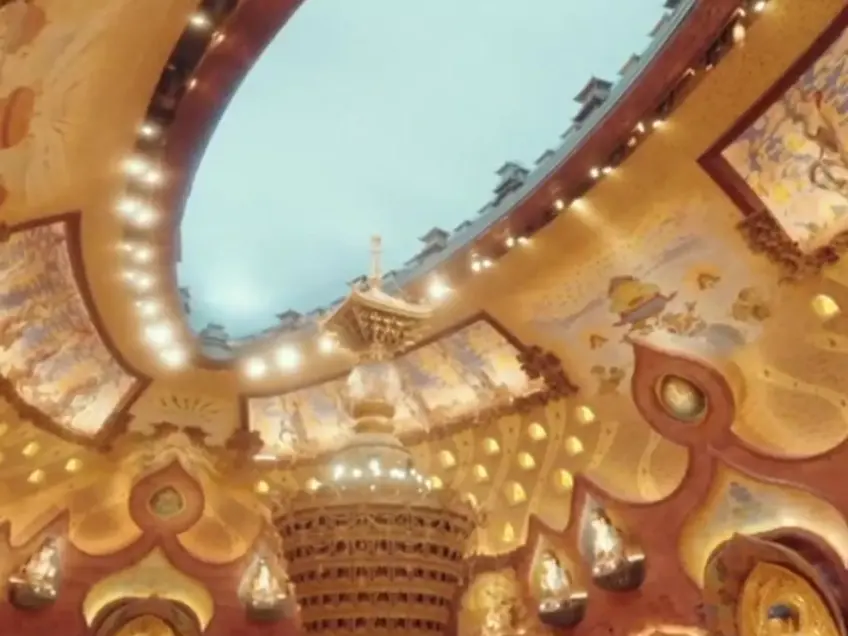
Inside Foding Palace, the first thing you see is the Chan Realm Grand View: a vast golden domed hall lined with tiers of Buddhist niches and sculptures, featuring a stupa-shaped installation in the center and natural light streaming down from above. Several floors below are areas such as the Ten Thousand Buddha Corridor and the Relic Hall. The relic is usually enshrined deep in the underground palace and is only open for public viewing on New Year's Day, Chinese New Year, National Day and a few Buddhist holidays. Check the site's announcements for exact dates each year.
The palace also houses a golden reclining Buddha backed by an illuminated wall of Buddhist niches, where many visitors pause for a quiet moment. The interior is huge, so exploring level by level involves plenty of walking—wear comfortable shoes.
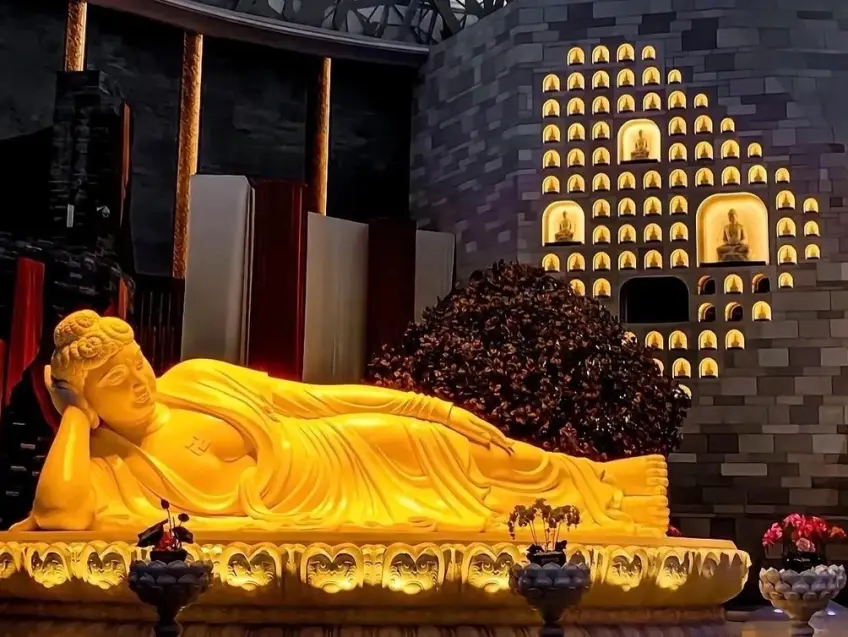
Visitor etiquette: Both Foding Palace and Foding Temple are religious sites. Avoid revealing clothing and keep your voice down inside the halls. Photography or flash may be prohibited in some areas, so watch for on-site signs.
Foding Pagoda, Foding Temple and Hongjue Temple Pagoda
Foding Pagoda: A tall pavilion-style pagoda standing on the summit next to Foding Palace, serving as the visual centerpiece of the entire scenic area. From the plaza below, you can take in the dome of Foding Palace and the surrounding forests; on clear days, the skyline of downtown Nanjing is visible in the distance. Whether the interior is open for climbing depends on on-site announcements.
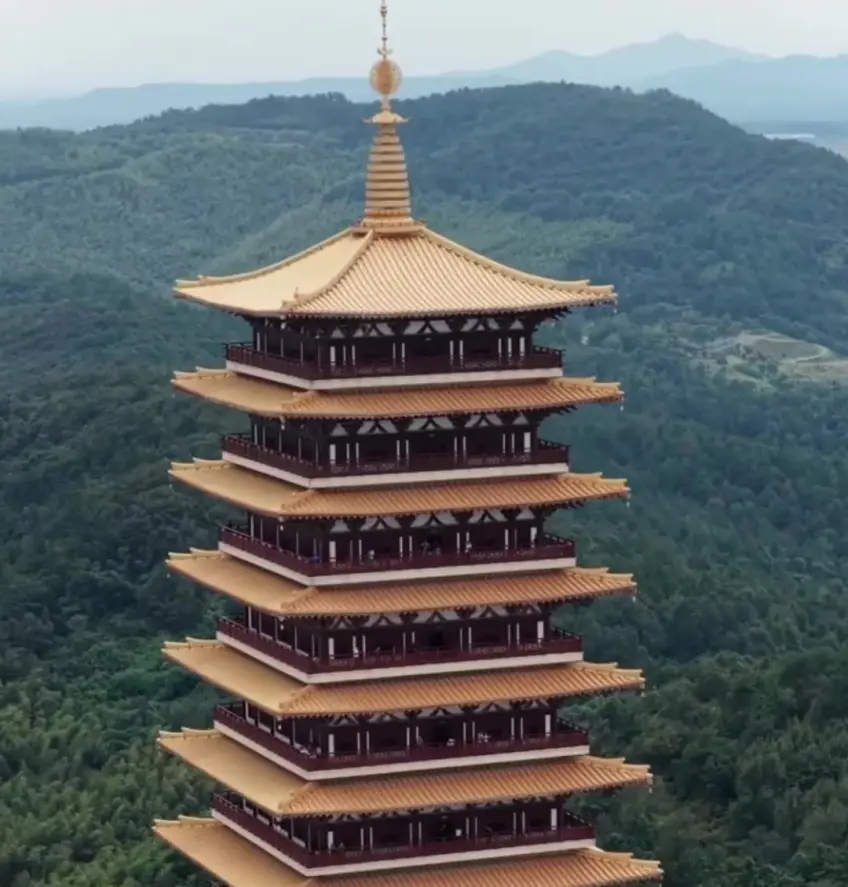
Foding Temple: A cluster of temple buildings built along the hillside, with sweeping roofs and subdued tones that evoke Tang dynasty architecture. After leaving Foding Palace, follow the mountain path over here and stroll slowly among the halls—it's much quieter than inside Foding Palace.
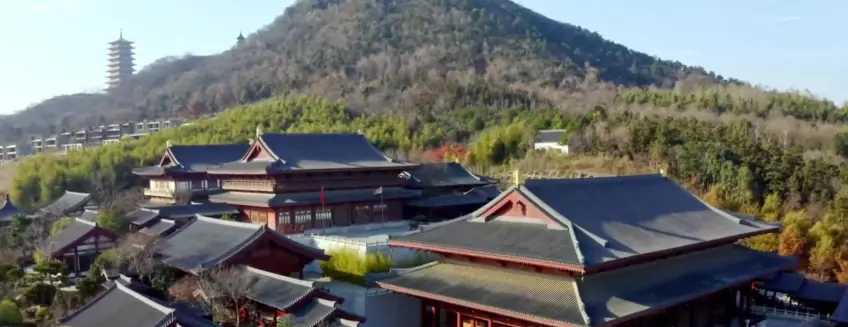
Hongjue Temple Pagoda: A brick pagoda not far from Foding Palace. Dating back to the Ming dynasty, this old pagoda contrasts nicely with the newly built Foding Pagoda. If you like historic architecture, it's worth the short detour.
Tomb of Zheng He & Yue Fei's Anti-Jin Fortifications
If you're interested in history, Niushou Mountain has two often-overlooked sites. The first is the Tomb of Zheng He: the Ming dynasty navigator died during his seventh voyage to the Western Seas, and the imperial court built his tomb on the southern slope of Niushou Mountain. The tomb complex you see today was restored in 1985. The second is Yue Fei's Anti-Jin Fortifications: in the fourth year of the Jianyan era of the Southern Song dynasty, Yue Fei set up an ambush around Niushou Mountain and decisively defeated the army of Jin Wuzhu. Stone fortification ruins from that time remain on the mountain. Both sites are some distance from Foding Palace and draw far fewer visitors, making them ideal if you have plenty of time and prefer a quiet walk.
Tickets, Hours & Reservations
According to information published by the scenic area and major ticketing platforms, Niushou Mountain is generally open from 8:30 to 17:30, with last entry at 16:30. Hours are extended on special dates such as New Year's Eve (December 31). Adult tickets cost about ¥145 when purchased online in advance and slightly more at the gate. The scenic area's mini program also offers combo tickets that include all-day shuttle bus rides. Children aged 6 and under or 1.4 meters and shorter, seniors aged 70 and over, and other eligible visitors enter free with valid ID.
Prices and discount policies change every year, and summer sometimes brings night tours, student discounts, and other promotions. Before you go, check the latest announcements on the official "Niushou Mountain Cultural Tourism Zone" mini program or WeChat account. It gets very crowded on holidays and relic veneration days, so book your tickets a day or two in advance.
How to Get to Niushou Mountain
Taxi or private car: The easiest option. A taxi from Nanjing South Railway Station takes about 20–30 minutes; from Xinjiekou or the Confucius Temple area, it takes around 40 minutes if traffic is light. Taxis can be hard to get at the entrance on the way back, so consider booking one in advance.
Metro plus taxi: Take Metro Line S1 (the airport line) to Hohai University / Focheng West Road Station, then a 10-minute taxi ride to the scenic area. Line S1 connects Nanjing South Railway Station at one end and Lukou Airport at the other, making it convenient whether you're coming from the high-speed rail station or the airport. You can store your luggage at the station before heading out.
Getting around inside: The scenic area is large. Walking from the East Gate to the Buddha Summit Palace (Fodinggong) takes about 20 minutes, mostly uphill. If you're traveling with seniors or children, take the shuttle bus between the main sights and save your energy for exploring the palace interior at your own pace.
Half a day or a full day? Three ways to plan it
Half-day highlights: Arrive before 9 am, take the shuttle bus straight to Usnisa Palace, and spend about two hours exploring the Zen Realm Grand View and the underground levels. Afterward, take photos in the plaza in front of Usnisa Pagoda and leave before noon. In the afternoon, you can head to Confucius Temple, Zhonghua Gate, or Laomendong—all in southern Nanjing and easy to combine. A half-day itinerary is perfect for travelers on a tight schedule who still want to see Usnisa Palace in person, leaving more time for museums and old streets downtown.
Full-day slow visit: Explore Usnisa Palace in the morning, grab a simple lunch inside the scenic area, then climb Usnisa Pagoda and visit Usnisa Temple in the afternoon. Continue to Hongjue Temple Pagoda and Zheng He's Tomb before leaving in the late afternoon. Spring and autumn offer pleasant weather, making walks around the mountain especially enjoyable.
Combining with other attractions: Niushou Mountain is close to Nanjing South Railway Station, so many visitors slot it into their first day after arriving in Nanjing or their last day before departing, using the high-speed rail station as a transfer point. You can also split it across two days with Sun Yat-sen Mausoleum and Presidential Palace—see How to plan a Nanjing 2-day tour.
Things to note for first-time visitors
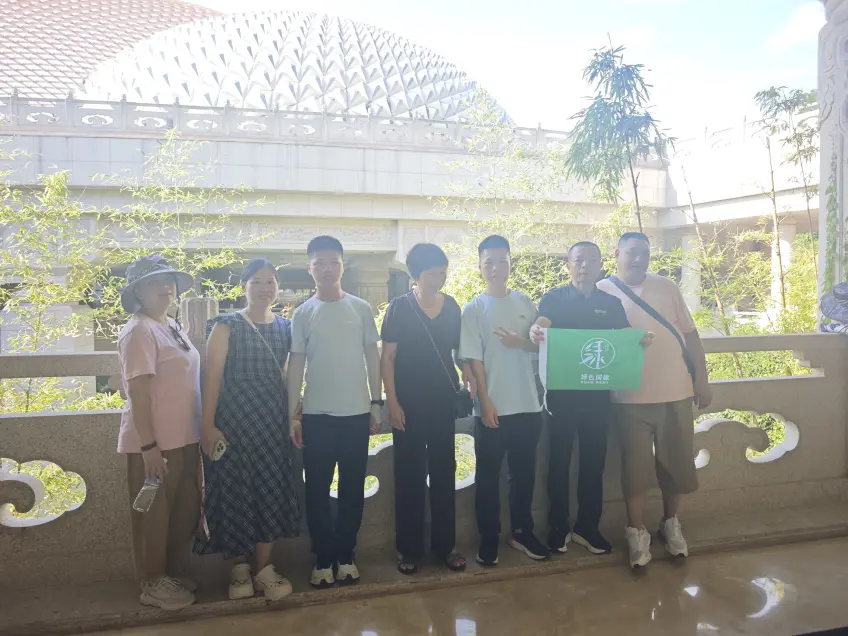
Bring your ID: Ticket purchases and park entry usually require real-name registration. International visitors should bring their passport, Taiwan Compatriot Permit, or Home Return Permit, and make sure the document used when booking online matches the one you carry.
Avoid worship days and long holidays: On days when the relic is open for public veneration, as well as during the National Day and Chinese New Year holidays, crowds multiply and lines form for both the shuttle buses and the Usnisa Palace entrance. If you're mainly interested in the architecture, a weekday morning is the most relaxed time to visit.
Allow time for meals and rest: The scenic area is large, dining options are limited, and restaurants get crowded at mealtimes. Consider having an early lunch or bringing water and snacks to keep your energy up while waiting for the shuttle bus.
Best photo times: The pool outside Usnisa Palace offers the clearest reflections on windless mornings. Usnisa Pagoda and the dome look best in the slanting evening light, but note that entry stops at 16:30 and the park closes at 17:30—don't miss your exit while waiting for the perfect light.
Seasons & weather
Spring is the most beautiful season at Niushou Mountain, when flowers and trees are in full bloom—living up to the local saying "spring at Niushou." In autumn, from late October to November, the forests turn yellow and the ginkgo trees in front of Usnisa Pagoda change color. Nanjing gets very hot in summer; Usnisa Palace is cool indoors, so plan outdoor sightseeing for the morning. It's windier and colder on the mountain than in the city during winter, so bring an extra jacket. For seasonal weather and clothing tips, see our Nanjing four-season travel guide.
How to combine Niushou Mountain, Qixia Mountain and Da Bao'en Temple
Locals say "spring at Niushou, autumn at Qixia," and the two mountains sit at opposite ends of the city. Niushou Mountain is known for modern architecture like Usnisa Palace and its spring blossoms, while Qixia Mountain in the northeast is famous for autumn red leaves and the thousand-year-old Qixia Temple. In 2015, the parietal bone relic of the Buddha was transferred from Qixia Temple to Niushou Mountain, making them ideal visits for different seasons or separate days.
The relic was unearthed at the Changgan Temple ruins outside Zhonghua Gate, now the Da Bao'en Temple Ruins Park, not far from Confucius Temple and Laomendong. If you're curious about the relic's origins, visit Da Bao'en Temple first to see the underground palace and ruins, then head to Niushou Mountain to see where it's enshrined today—the story comes full circle. Afterward, continue to Confucius Temple for the night views of the old streets in southern Nanjing.
Visit Niushou Mountain with us
Niushou Mountain isn't far from downtown, but it's a bit of a trek from the nearest metro station, and the scenic area itself is huge. Going on your own means spending a lot of time waiting for shuttles and walking. If you're traveling with seniors or the whole family, using a private car in Nanjing to link Niushou Mountain with sights in the southern part of the city makes things much easier. If you'd like to hear about the origins of the Buddha's parietal bone relic and the stories of Hongjue Temple and Zheng He, consider hiring a Nanjing tour guide. For more things to do, see our Nanjing city page.
Jinling Dream 3-day 2-night tour: Nanjing and Niushou Mountain
Three days to explore Nanjing at a relaxed pace: Great Bao'en Temple and Sun Yat-sen Mausoleum, Niushou Mountain, Confucius Temple, Presidential Palace, Six Dynasties Museum and Laomendong, with the final half day saved for Nanjing Museum. This private tour includes airport transfers, vehicle, guide, 2 nights' hotel and admission tickets, with an English-speaking guide available.
Meet in Jinling 2-day tour: Nanjing ancient capital and Niushou Mountain 2-day tour, no shopping
2-day, 1-night private tour with pickup and drop-off at Nanjing Airport. Day 1: Niushou Mountain, then explore Yanjili in Jinling Town in the evening. Day 2: Sun Yat-sen Mausoleum, Presidential Palace, Xuanwu Lake, Memorial Hall of the Victims in Nanjing Massacre and Confucius Temple. Includes vehicle, guide, hotel and admission tickets. Foreign-language guide available.
Slow travel in Nanjing 4 days 3 nights: Slender West Lake, He Garden, Dongguan Street, Nanjing (Niushou Mountain, Confucius Temple, Sun Yat-sen Mausoleum, Presidential Palace, Bao'en Temple, outer Qinhuai River cruise, Nanjing Museum)
A 4-day, 3-night private tour starting in Yangzhou and ending in Nanjing: He Garden, Dongguan Street and Slender West Lake, then Niushou Mountain and the Confucius Temple night view in Nanjing; Sun Yat-sen Mausoleum, Presidential Palace and Laomendong; Nanjing Museum on the last day. Includes transport, guide, 3 nights' hotel and admission tickets. English-speaking guide available.
FAQs
How much are Niushou Mountain tickets?
Adult tickets bought online in advance cost around ¥145; buying at the gate is more expensive. The mini program offers combo tickets that include all-day sightseeing bus access. Children, seniors aged 70 and over, and others qualify for free admission. Prices are subject to the scenic area's latest official announcements.
What are the opening hours for Niushou Mountain?
Generally 8:30–17:30, with last entry at 16:30. Hours are extended on special days like New Year's Eve, and night tours are sometimes offered in summer. Check the scenic area's announcements for the current year.
How long does it take to visit Usnisa Palace at Niushou Mountain?
Just visiting Usnisa Palace takes about two hours. Adding Usnisa Pagoda and Usnisa Temple makes it about half a day. If you also want to see Hongjue Temple Pagoda, Zheng He's Tomb and other sites, plan on a full day.
Can you see the Buddha's parietal bone relic at Niushou Mountain?
The relic is normally enshrined in the underground palace of the Buddha's Crown Palace and is only open for public viewing on New Year's Day, Chinese New Year, National Day, and a few Buddhist holidays. Check the scenic area's annual announcements for exact dates—expect large crowds on those days.
Which is more worth visiting, Niushou Mountain or Qixia Mountain?
It depends on the season and your interests: choose Niushou Mountain in spring if you want to see modern Buddhist architecture and the parietal bone relic of the Buddha; choose Qixia Mountain in autumn for red leaves and a thousand-year-old temple. If you have enough time, visit them on separate days.
How do I get from Nanjing South Railway Station to Niushou Mountain?
A taxi takes about 20–30 minutes and is the most convenient option. You can also take Metro Line S1 to Hohai University / Focheng West Road Station, then take a taxi for about 10 minutes.